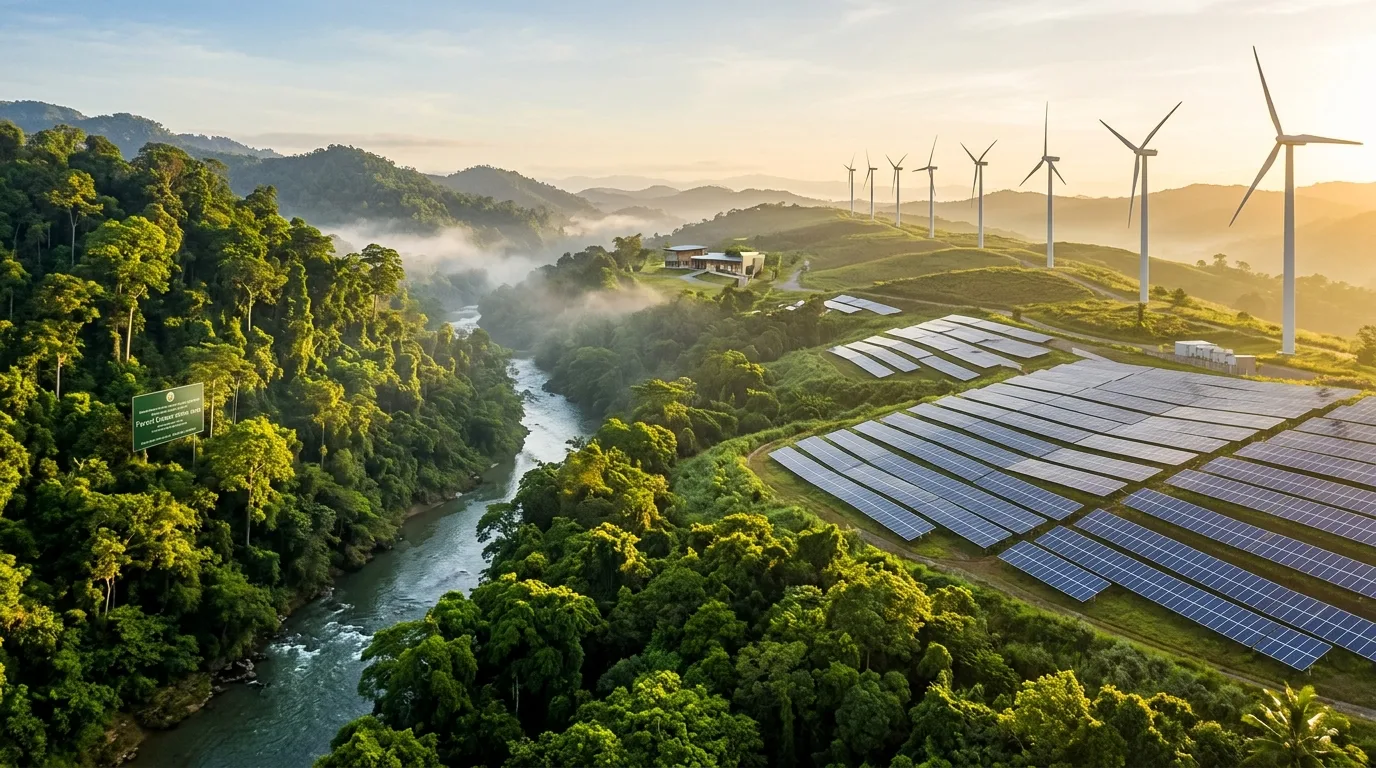
PALAWAN — The movement to protect the Philippines’ precious natural heritage is entering an exciting new era where environmental passion is being matched by powerful financial innovation. No longer confined to the limitations of traditional grant-based models, conservationists are now pioneering sustainable "nature-positive" financing strategies that transform biodiversity into a thriving asset for the nation. By integrating cutting-edge tools like biodiversity credits, carbon markets, and robust private-sector partnerships, the Philippines is demonstrating that protecting our ecosystems is one of the most effective ways to secure a prosperous and resilient future for all.
Turning Stewardship into Economic Strength
We are witnessing a paradigm shift where the protection of our forests, mangroves, and watersheds is being recognized for its immense economic value. Through initiatives like the Forest Foundation Philippines’ recent PHP 23-million grant distribution and the adoption of International Union for Conservation of Nature (IUCN) standards by the DENR, the government is successfully creating a measurable framework for ecosystem restoration. This approach ensures that conservation is no longer viewed as a public expense but as a productive investment that yields tangible returns: cleaner water, reduced flood risks, and enhanced food security for Filipino families. By placing nature at the center of development planning, these policies are building a frontline defense that secures both our environment and the livelihoods that depend on it.
Innovative Finance: From Microgrids to Carbon Credits
The rise of impact investing is bringing unprecedented resources to the country’s most critical landscapes, including the "last frontier" of Palawan. Landmark initiatives, such as the ₱800-million microgrid financing facility for hybrid renewable energy, prove that private capital is eager to support sustainable, community-centered progress. Simultaneously, the emergence of the country’s first locally owned forest carbon projects in Mount Mantalingahan offers a blueprint for how indigenous communities can benefit directly from the preservation of their ancestral lands. These financial tools create powerful incentives for stewardship, ensuring that forests are more valuable standing than cut down, and providing a sustainable revenue stream for the heroic guardians of our natural resources.
A Future-Proof Strategy for National Resilience
Looking ahead, the Philippines is positioning itself as a global leader in integrating climate action with economic opportunity. As the nation scales its National Nature-based Solutions (NbS) framework, we are seeing a "whole-of-society" approach that aligns private incentives with the public good. By fostering an environment where conservation projects can attract long-term investment, the Philippines is moving toward a future where our natural capital is not just preserved, but continuously regenerated. This holistic shift ensures that our development aspirations are not only achieved but are done so in a way that remains fair, inclusive, and deeply committed to the well-being of the next generation of Filipinos.