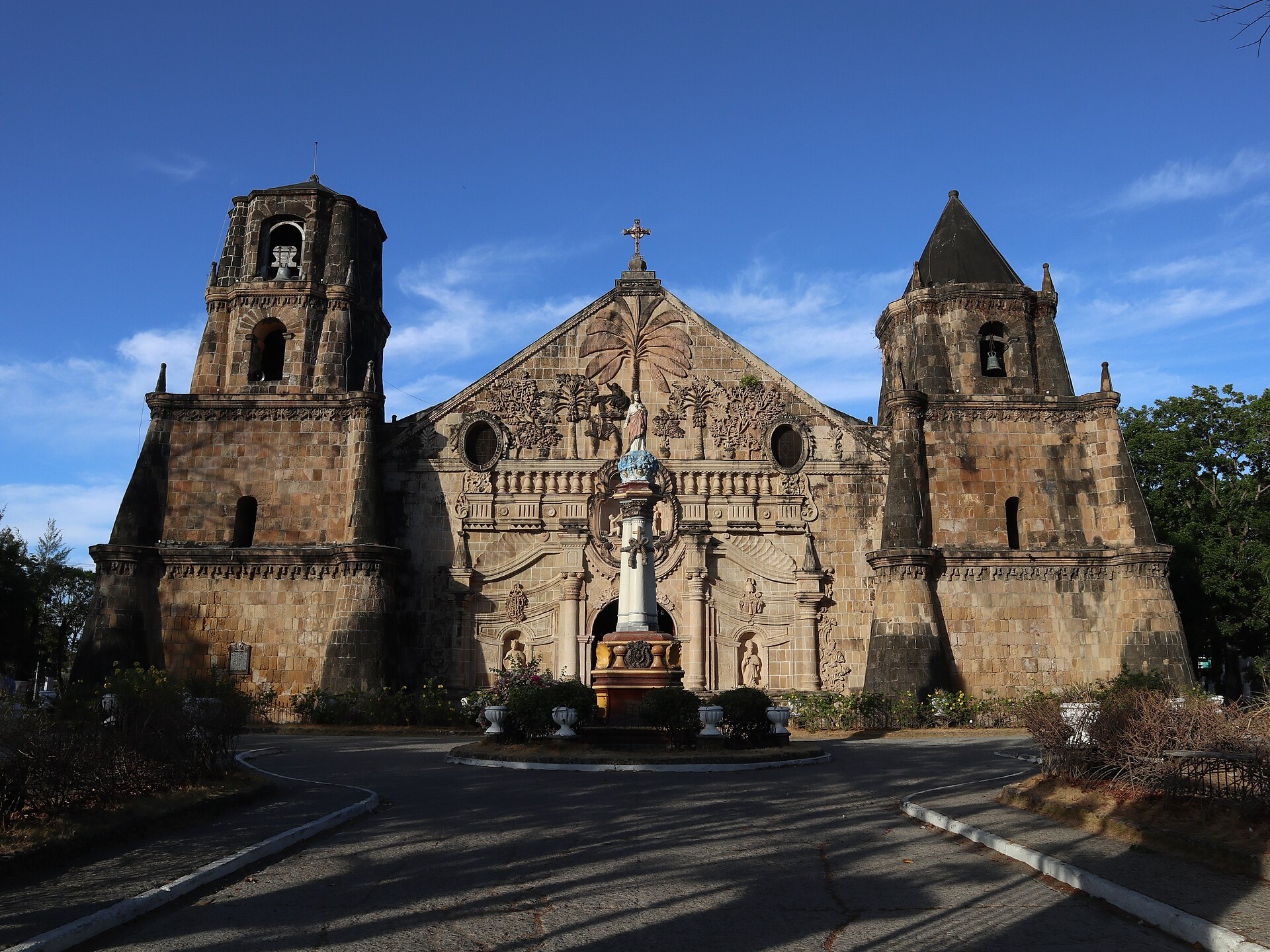
MIAGAO, ILOILO — Standing proudly on a hill overlooking the Miagao River, the Santo Tomás de Villanueva Parish Church—known simply as Miagao Church—is far more than a house of worship. It is a stone testament to Filipino resilience, a fortress that has withstood pirates, earthquakes, and fire for over two centuries. Its magnificent facade, a UNESCO-listed masterpiece carved from golden coralline limestone, tells a story where faith and local culture beautifully intertwine.
In April 2026, a new UNESCO World Heritage marker was unveiled, reaffirming the church's status as an architectural jewel of the Philippines. The marker highlights its uniqueness and its importance to the local community, adding a fresh chapter to its storied legacy. It serves as an invitation for a new generation of travelers to discover this "Earthquake Baroque" wonder, the only UNESCO site in the Visayas and Mindanao.
A Fortress of Faith and Ingenuity
Construction of the present church began in 1786, driven by a desperate need for a sanctuary against relentless Moro pirate raids. Its design is a direct response to that threat: foundations sink six meters deep, walls are 1.5 meters thick, and massive buttresses reinforce the structure. This is the "Earthquake Baroque" style, where European aesthetics were adapted with Filipino ingenuity to survive the region's violent tremors.
Beyond its defensive strength, the church's facade is its masterpiece. A lush stone tapestry depicts St. Christopher carrying the Child Jesus, surrounded by tropical foliage—coconut, papaya, banana, and guava trees. This fusion of Roman Catholic iconography with native elements creates a truly Filipino expression of faith, immortalized in the warm, golden hue of the stone. The asymmetrical twin bell towers add to its distinct, unforgettable silhouette.
New UNESCO Marker Shines Light on Timeless Beauty
The April 2026 installation of a new UNESCO marker re-emphasized this cultural treasure. It came just as the local government, led by Mayor Richard Garin, Jr., rolled out enhanced safety measures for Holy Week, ensuring that the thousands of pilgrims and tourists who visit each year can do so safely. The church remains an active, living parish, seamlessly blending its historical grandeur with vibrant local life.
This recognition underscores Miagao Church not just as a relic of the past but as a dynamic center of community and faith. Its survival through revolutions, fires, and the devastating 1948 earthquake is a source of immense local pride. Today, it is the star attraction of a town that celebrates its heritage through colorful festivals like the Salakayan Festival in February, drawing visitors keen to experience Ilonggo culture at its most authentic.
A Journey into the Ilonggo Soul
A visit to Miagao Church is an essential Iloilo experience. The scenic 45-minute bus ride south from the city winds through rolling countryside, building anticipation. The best time to arrive is early morning, when the sunrise paints the intricate facade in a magical light, far from the midday crowds. As an active place of worship, respectful attire is required.
For photographers, the facade is a dream, and a wide-angle lens is essential to capture its full scale. Beyond the church, the town offers a peaceful, rural charm perfect for exploration. Every stone of this magnificent fortress church tells a story of endurance, artistry, and unwavering faith—a story that continues to unfold, inviting the world to witness its enduring splendor.