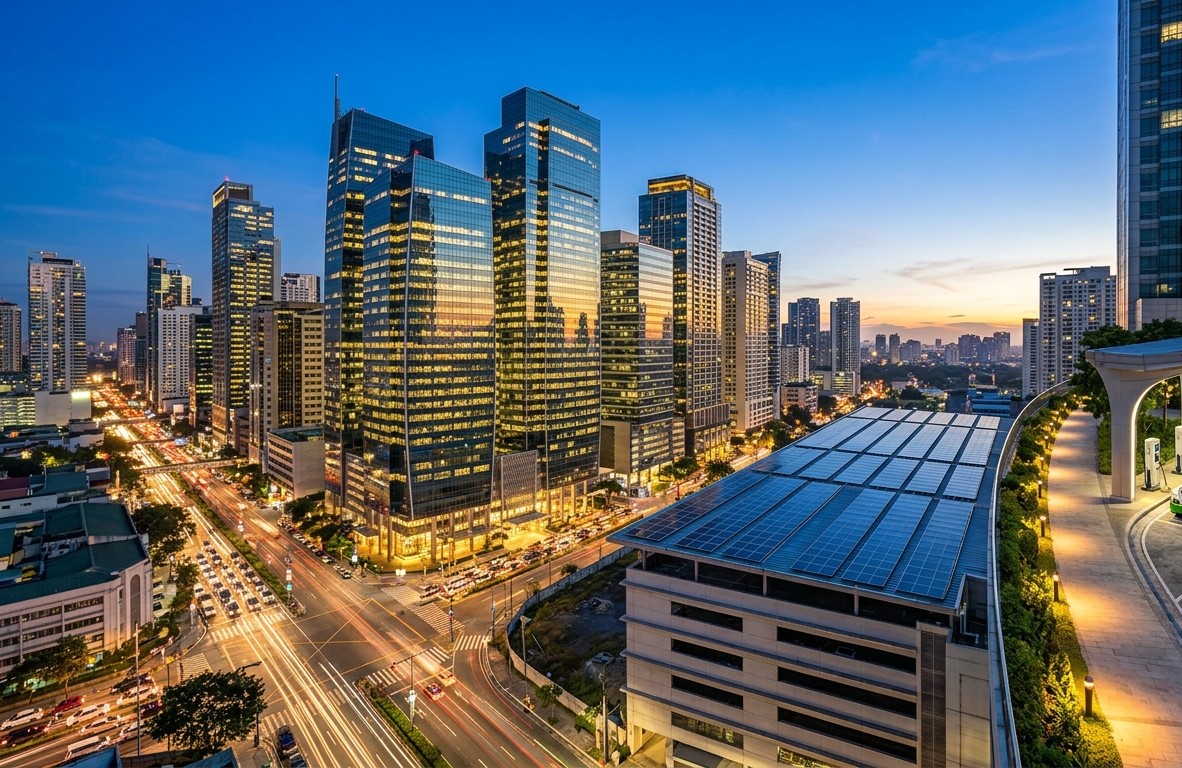
MAKATI CITY — As Makati celebrates its 356th founding anniversary, a comprehensive report showcases a year marked by strong revenue performance, business-friendly tax reforms, and a landmark shift toward renewable energy. The report, titled “Makati at 356: The City That Sets the Standard,” highlights a governance approach that combines fiscal responsibility, social welfare, and environmental sustainability, positioning the city as a model for urban development.
Strong Revenue Growth and Tax Relief for Residents
Makati recorded a 10-percent increase in business tax collections compared to April of the previous year, reflecting sustained economic activity and efficient revenue management. Alongside this growth, the city government implemented a 15-percent across-the-board reduction in land taxes, providing relief to property owners while maintaining full funding for essential public services. This strategy of boosting revenues while easing taxpayer burdens remains a key component of Makati’s long-term fiscal sustainability.
Streamlining Services Through Digital Innovation
To improve efficiency and reduce bureaucratic delays, the city has completed major upgrades to its business permit and construction permit systems. The enhanced Business One-Stop Shop and the relocated One-Stop Shop for Construction Permits now fully comply with the Ease of Doing Business (EODB) law and the standards of the Anti-Red Tape Authority (ARTA). These reforms form part of a broader digital transformation program that incorporates artificial intelligence and modern technologies into government operations, with the goal of accelerating service delivery while preserving employment opportunities.
A Historic Shift to 100% Renewable Energy
Among the report’s most notable achievements is Makati’s transition to renewable energy. In March 2026, the city received recognition from the Energy Regulatory Commission as the first local government unit in the Philippines to commit to a 100-percent renewable energy supply for all government facilities. The initiative was formalized through a nine-year Renewable Energy Supply Agreement with ACEN Corporation, which will provide solar, wind, and geothermal power to 154 city-owned facilities, including City Hall, Ospital ng Makati, and the University of Makati. The agreement is expected to generate approximately ₱300 million in savings over its duration while preventing nearly 290,000 metric tons of carbon emissions. As an added benefit, ACEN will install 19 electric vehicle charging stations in city facilities at no cost to the local government, supporting Makati’s growing fleet of e-jeepneys, e-buses, and e-shuttles.
A Forward-Looking Vision for Urban Development
The milestones achieved during Makati’s 356th anniversary year illustrate a governance model that integrates fiscal discipline, digital modernization, and environmental leadership. Through stronger revenues, streamlined government processes, and pioneering investments in renewable energy, the city continues to demonstrate that economic growth and sustainable, people-centered governance can advance hand in hand.