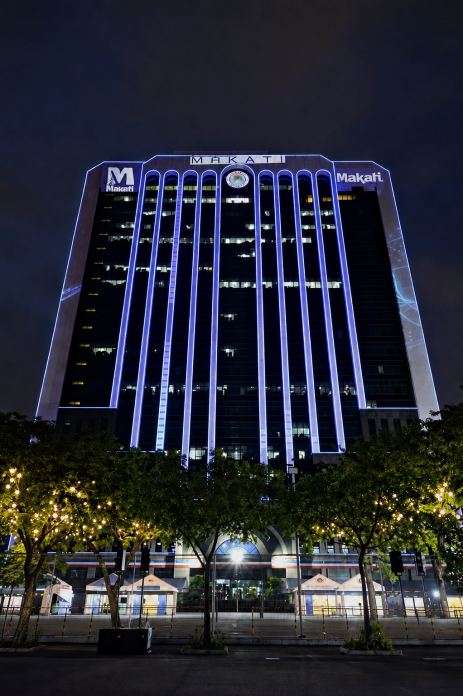
MAKATI CITY — Mayor Nancy Binay led the ceremonial switch of 11 major city‑owned facilities to 100 percent renewable energy on July 1, 2026, marking the first phase of a citywide clean‑power transition. The move positions Makati’s commercial and government properties as greener assets, directly enhancing the city’s attractiveness to environmentally conscious investors and tenants.
Government Properties Run on Clean Power
The New Makati City Hall, University of Makati, Makati Coliseum, Ospital ng Makati, and seven other public buildings now draw electricity from solar, wind, and geothermal sources. Their combined peak demand reaches 5.76 megawatts, satisfying nearly 61 percent of the city’s clean energy target for the year.
ACEN Corporation supplies the renewable power under a nine‑year contract made possible by the Energy Regulatory Commission’s Retail Competition and Open Access program. The bundled procurement allowed the city to bypass traditional utilities and secure competitive rates for its most energy‑intensive properties.
Fiscal Savings Strengthen Public Investment Capacity
The switch is projected to save the city approximately ₱300 million over the contract period through discounted generation charges. Mayor Binay emphasized that every peso saved will be redirected to expanded public services, indirectly supporting the local real estate ecosystem by improving urban livability.
Lower operating costs for city‑owned buildings free up budget for infrastructure maintenance, street upgrades, and public space enhancements. These improvements raise the quality of the surrounding built environment, a factor that directly influences residential and commercial property valuations.
Green Shift Elevates Makati’s Real Estate Appeal
By decarbonizing its largest public structures, Makati sends a strong signal to the private sector. Office towers, retail centers, and residential condominiums that adopt similar green energy strategies can market themselves as sustainable assets, attracting multinational tenants with strict environmental, social, and governance mandates.
The city’s own transition demonstrates that a dense financial district can shift to renewables without disrupting operations. Commercial real estate brokers note that green‑certified buildings in Makati already command premium lease rates, and the LGU’s leadership further solidifies the central business district’s competitive edge.
Transparent Dashboard Tracks Carbon Cuts
A bilingual digital dashboard now displays hourly electricity consumption and avoided carbon emissions at City Hall and other public squares. The system translates technical data into relatable metrics, such as the equivalent number of trees required to offset the city’s previous carbon footprint.
This transparency provides real‑time evidence of environmental performance, a tool that property developers can use to validate sustainability claims to prospective buyers and lenders. The dashboard reinforces Makati’s reputation as a data‑driven, accountable investment destination.
EV Charging Network Adds Property Value
ACEN is installing 19 electric vehicle charging stations across city properties at no cost to the LGU. The chargers will serve the city’s growing fleet of e‑jeepneys, e‑buses, and municipal shuttles, all running on the same clean grid.
For adjacent commercial and residential buildings, the presence of reliable EV infrastructure adds a tangible amenity that future‑proofs property value. The network also reduces street‑level emissions, improving air quality in high‑density neighborhoods and making them more desirable for long‑term tenants.