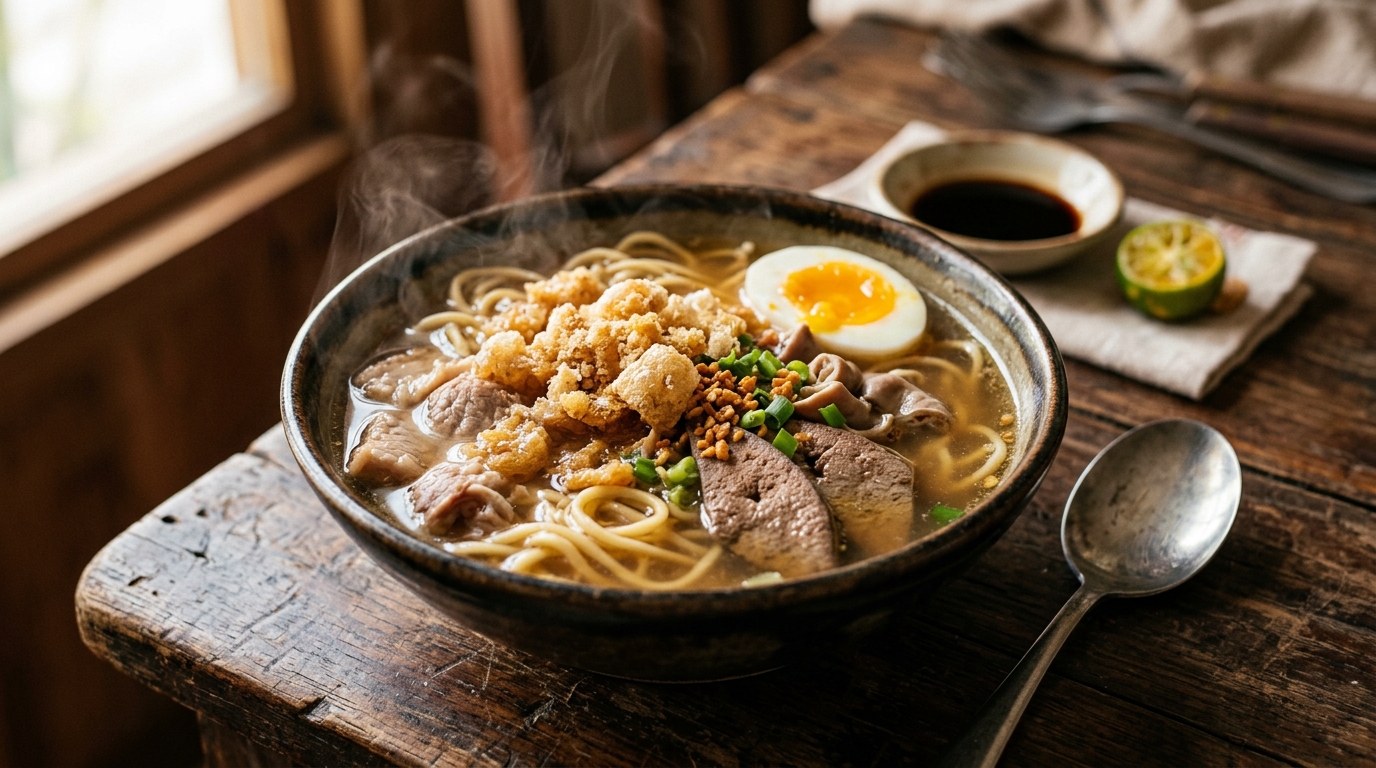
ILOILO CITY — The steaming bowl of noodles, pork offal, and crushed chicharon that has defined Iloilo City's culinary identity for generations may soon carry a seal no other Philippine dish has achieved. On May 30, 2026, Panay News reported that the University of the Philippines Visayas and the Iloilo City Government are jointly pushing for Geographical Indication registration of La Paz Batchoy, a legal designation that would permanently link the iconic dish to its place of origin and protect it from imitation. The initiative seeks to do for batchoy what Champagne has done for its namesake region in France—codify authenticity into law.
UP Visayas Chancellor Clement Camposano confirmed that the university is working closely with the city government to prepare the necessary documentation. "The GI will legally define what can be called La Paz Batchoy—its ingredients, preparation method, and most importantly, its origin," he said. The push aligns with Iloilo's UNESCO Creative City of Gastronomy status, which the city earned in 2023. A GI registration would add a formal, enforceable layer to that cultural recognition.
A Recipe That Tells the Story of a District
La Paz Batchoy traces its roots to the 1930s in Iloilo City's La Paz district, where butcher Federico Guillergan Sr. first combined fresh miki noodles with pork organs, chicharon, and a rich bone broth. Over nearly a century, the dish has become synonymous with Ilonggo cuisine, spawning chains like Deco's and Ted's that have carried the batchoy name across the Philippines and abroad.
The GI push addresses a long‑standing grievance of local cooks and culinary historians: that versions of batchoy prepared outside Iloilo, sometimes using different ingredients or methods, dilute the dish's identity. Under a GI, only batchoy prepared in Iloilo City using traditional methods could legally carry the name "La Paz Batchoy." This protection would be the first of its kind for a Philippine dish and would set a precedent for other regional specialties.
Building on ASEAN GI Leadership
The initiative builds on Western Visayas' growing leadership in the Geographical Indication space. The region already hosts the country's first two registered GIs—Guimaras Mangoes and Aklan Piña—and recently hosted the first‑ever ASEAN Regional Geographical Indications Forum and Exhibition. Deputy Director General Nathaniel S. Arevalo of the Intellectual Property Office had noted that "through GIs, traditional products become premium market assets that strengthen regional identity." The batchoy push takes that logic from agriculture and textiles into cuisine
.
For Iloilo's tourism and food sectors, a successful GI registration would be transformative. Tourists already visit the city to eat batchoy at its source; a GI would guarantee that the dish they eat is authentic. Food vendors would gain a marketable credential, and the city would add a legally protected culinary asset to its tourism portfolio. The road to GI registration is long and requires rigorous documentation, but with UPV's research capacity and the city government's institutional backing, La Paz Batchoy now has its strongest chance yet of becoming the Philippines' first GI‑protected dish.