CLARK FREEPORT ZONE — On April 28, 2026, inside the Clark Visitors Center, a handshake between Clark Development Corporation President Agnes VST Devanadera and JnH Philippines Development Corporation President Lee Sangte rewrote the timeline of a project that had once seemed indefinitely delayed. The amended lease agreement, signed before officials and staff, compressed the construction period for a ₱840‑million mixed‑use development from five years to just 30 months. For the property sector, the message was unambiguous: Clark is no longer a market of deferred promises but one of accelerating commitments, and Korean capital is betting on it with both speed and scale.
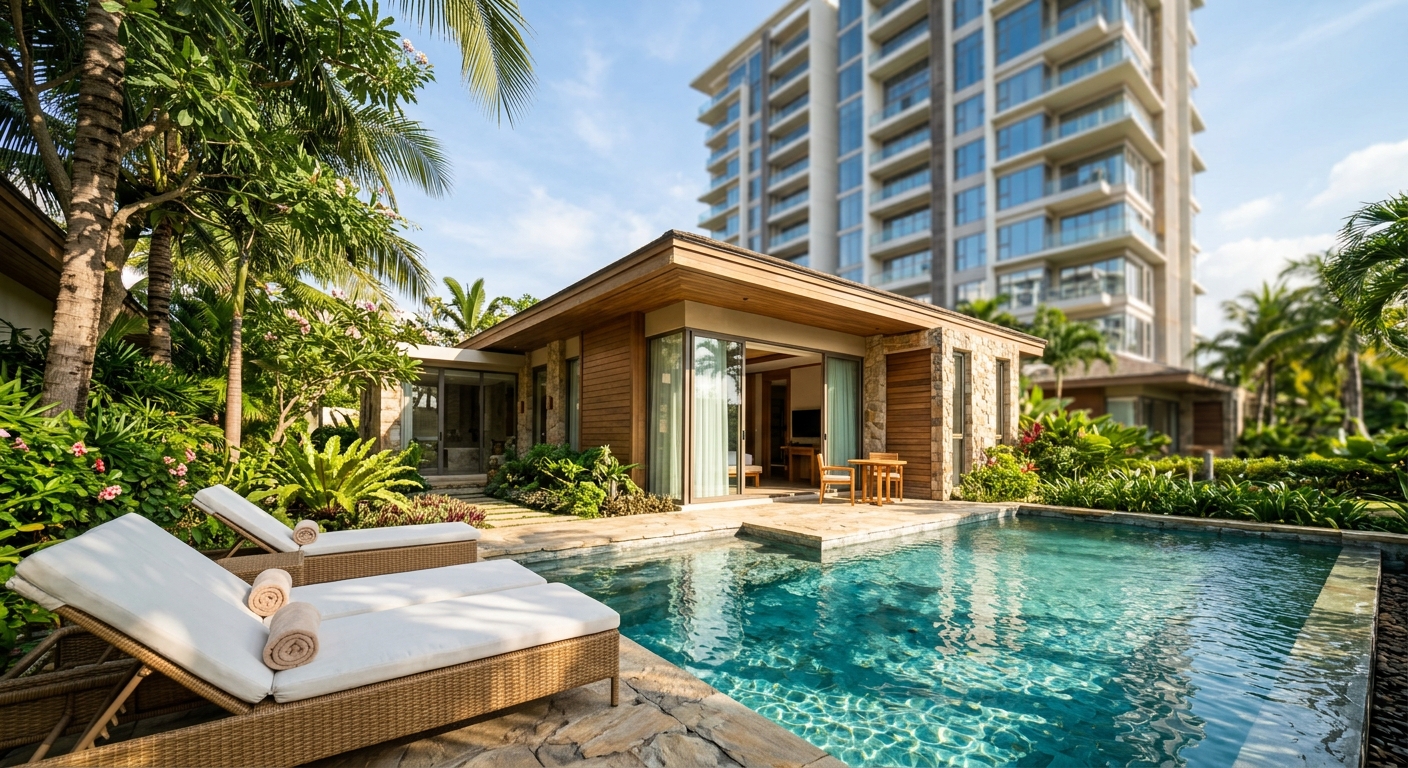
The project will rise on a 17,373‑square‑meter parcel along C.M. Recto Highway, a corridor increasingly defined by logistics hubs, hospitality assets, and residential conversions. Phase 1 delivers 17 pool villas, followed by a 15‑storey mixed‑use tower and two 12‑storey buildings. The 4,100‑room inventory that Clark has accumulated over years of piecemeal hospitality development will now expand by a single, integrated project whose phasing allows portions of the development to open ahead of full completion. For a freeport that recorded over 1.5 million overnight guests and 1.8 million same‑day visitors in 2025, the arithmetic is straightforward: demand for accommodations and lifestyle spaces is outpacing supply, and JnH intends to capture that gap.
A Developer Who Refused to Walk Away
The story behind the signing is, in Devanadera's telling, a narrative of resilience. "This is a story beset with challenges posed by the pandemic, which was totally unexpected," she said. "And yet, the corporation stood fast and, with all their resources, decided that they should pursue." JnH had entered the Clark market before COVID‑19 upended global travel and construction. Rather than abandoning its position, the Korean firm held its lease, waited out the disruption, and returned with a revised plan that was both more ambitious in its scope and more aggressive in its timeline.
Lee Sangte affirmed that the company will align construction with market demand and evolving visitor preferences. The 17 pool villas in the first phase suggest a bet on the leisure and staycation segment that has proven resilient across Southeast Asian markets, while the 15‑storey mixed‑use tower and two 12‑storey buildings add density and diversification. Once operational, the project will strengthen Clark's position as a premier hub for tourism, property investment, and the Meetings, Incentives, Conferences, and Exhibitions market—the same MICE segment that the recently inaugurated Clark International Convention Center was built to capture.
The project also joins a growing roster of Korean‑backed developments within the Freeport. Luxia Corporation, another South Korean firm, signed a ₱4.4‑billion agreement with CDC in March 2026 to develop a high‑end mixed‑use project featuring a hotel and serviced apartments along Creekside Road. Together, these investments form a Korean capital corridor that is reshaping Clark's built environment and signaling to other international investors that the Freeport's governance framework—its tax incentives, its visa‑friendly policies, and its proximity to Clark International Airport—can support projects of escalating complexity and valuation.
The Clark Property Market Enters a New Phase
The JnH expansion arrives at a moment when Clark's property fundamentals are the strongest they have been since the Freeport's conversion from an airbase. CDC is on track to hit its ₱12.35‑billion full‑year investment target, with first‑quarter commitments already approaching ₱10 billion. Among the approved projects are a ₱4‑billion mixed residential and hotel development near Hann Resorts, a ₱1.23‑billion assisted‑living facility spanning 4.9 hectares, and the newly opened ₱601.74‑million Pampanga Provincial Hospital–Clark, which now serves more than 151,500 workers, locators, and residents.
Colliers Philippines, in its first‑quarter 2026 briefing, identified Central Luzon as "the country's next real estate hotspot," with Pampanga closing 2025 at 538,000 square meters of office supply and a 17‑percent vacancy rate. The Board of Investments reported that Central Luzon attracted ₱21.5 billion in approved projects in the first two months of 2026 alone—the largest share of the national total. Into this pipeline, JnH's accelerated timeline injects both urgency and confidence: a developer who compresses construction from five years to 30 months is a developer who expects demand to be present, not someday but soon.
Devanadera underscored the weight of the moment in remarks directed at JnH's leadership: "We are giving our full support. In fact, your project is really a landmark, and it is something that we are very proud of. Anything that ends well is always something that we treasure." For a freeport that has spent years converting legacy infrastructure into investable assets, the amended lease agreement is not merely a contract. It is proof that Clark's property story has entered a phase where the question is no longer whether projects will be built, but how quickly they can open their doors. JnH's answer—30 months, phased, and backed by ₱840 million—now stands as a benchmark.