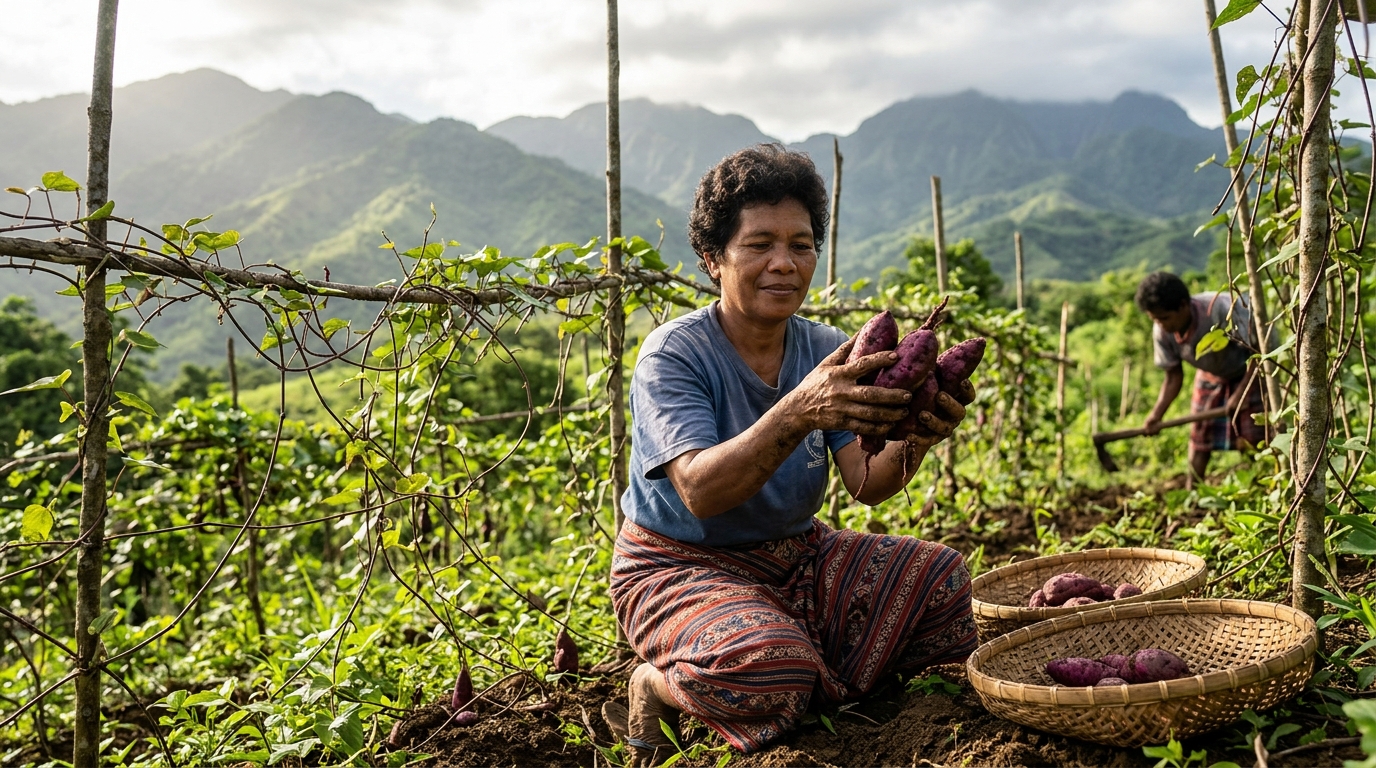
PORAC, PAMPANGA — Deep in the highlands of Sapang Uwak, the Aeta people have spent generations cultivating vibrant purple ube, treating each harvest as a sacred tradition passed down through centuries . Today, that ancestral devotion is echoing more than 8,000 kilometers away in New Zealand, where entrepreneur Alonzo Nieves is bridging oceans to bring this indigenous heritage to the global market.
The story starts in the rugged mountains of Porac, where Aeta farmers like Nelda Lansang have perfected ube cultivation without synthetic fertilizers. "In the mountain ridges, we leave the crop to grow with almost no tending," Lansang once shared, describing how secondary forests provide natural trellises for ube vines . The soil at elevations reaching 457 meters above sea level is rich enough to produce tubers that now command attention from international buyers.
From Local Farms to Digital Marketplaces
Nieves, a visionary entrepreneur with roots in Pampanga, built his export startup around the rich agricultural knowledge of the Aeta community. He immerses himself in a bustling digital marketplace, scrolling through thousands of posts on ube seedlings and powders to connect local farmers with international buyers. The venture transforms what was once a seasonal crop sold along streets for P60 to P100 per kilo into a globally traded commodity with premium pricing .
The Aeta planting technique, now being studied by researchers at Pampanga State Agricultural University (PSAU), has shown promising potential to accelerate ube sprouting from one month to just two weeks using traditional mineral residue treatment . This indigenous knowledge, nearly lost after the 1991 Mount Pinatubo eruption displaced many Aeta communities, is now being recognized for its agricultural value. PSAU's research aims to help indigenous farmers improve production while preserving their cultural practices.
Eco-Tourism and Cultural Immersion Alongside Exports
Sapang Uwak has quietly transformed into a destination for travelers seeking more than just waterfalls. The barangay serves as the gateway to Miyamit Falls, a hundred-foot waterfall known for its strong water surges and clean, potable pools . Adventure seekers and hikers frequently trek the two-to-three hour trail through rolling hills, often using the route as an alternative jump-off point to Mount Pinatubo . For those wanting deeper connection, farm tours now offer hands-on ube harvesting experiences, cooking workshops for traditional ube halaya, and cultural immersion with Aeta community members who share their stories and indigenous music .
The convergence of tradition and innovation in Sapang Uwak proves that when culture, community, and entrepreneurship align, even the widest distances cannot limit the reach of a shared dream. For the Aeta farmers who once felt like "aliens in our own country" as development encroached on their ancestral lands, this global recognition of their agricultural heritage represents a new chapter—one where their centuries-old knowledge becomes a bridge to economic opportunity rather than a relic of the past