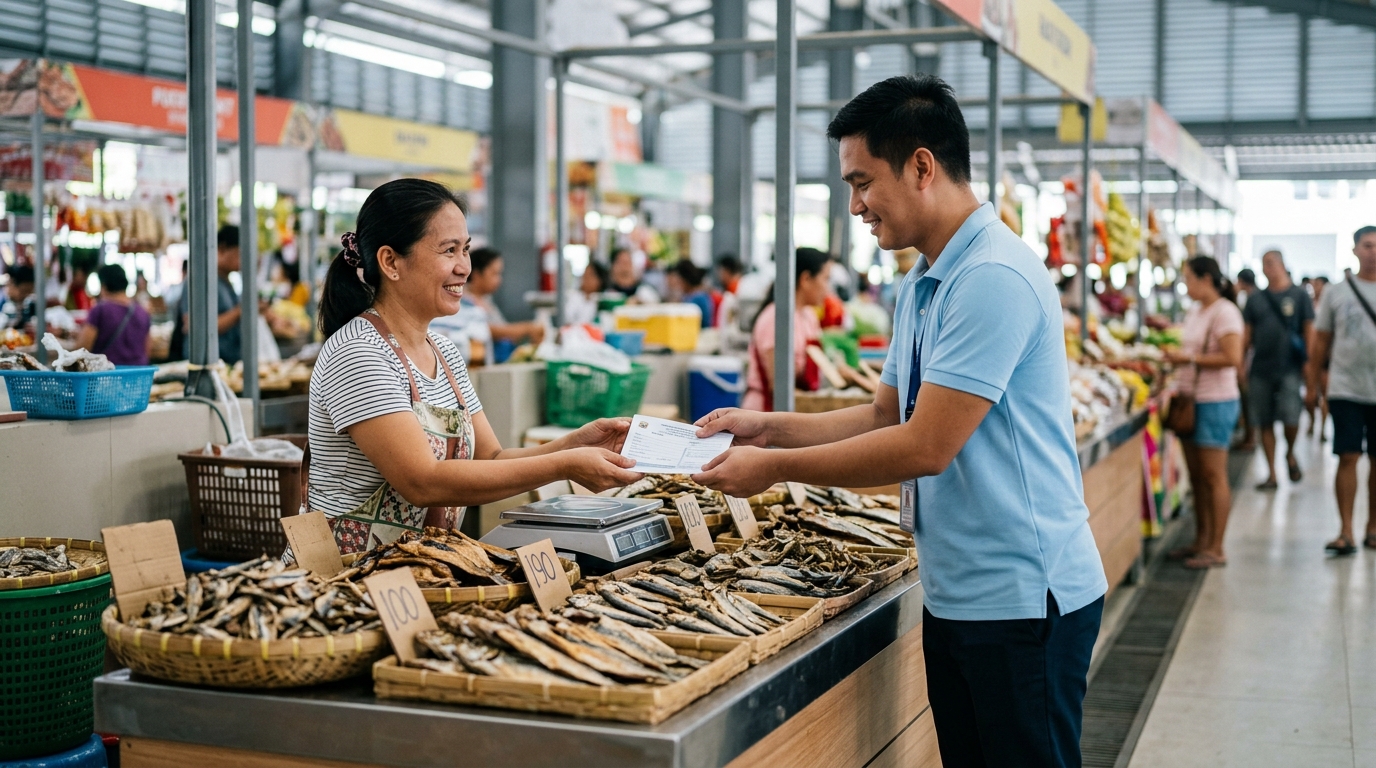
ILOILO CITY — On May 25 and 26, 2026, the Iloilo Terminal Market will transform from a bustling hub of dried fish and local produce into a one‑stop shop for government services. The Anti‑Red Tape Authority has tapped Iloilo City to host the Grand Ease of Doing Business Fair 2026, a two‑day event that aims to bring frontline government transactions directly to the public, targeting approximately 2,000 Ilonggos. The choice of venue—the city's flagship redeveloped public market—is itself a statement about where government services belong: not behind bureaucratic counters in distant offices, but embedded in the daily rhythms of where people already gather.
"It is a one‑stop shop for two days. Each agency will bring its frontline service. It's bringing government services closer to the people," said Nabetshe Atina Silao, Iloilo City ARTA Focal Person. The city government will deploy four of its own offices, including the City Treasurer for on‑site community tax certificate issuance, the Office of the Senior Citizens Affairs and the Persons with Disability for identification cards, the City Civil Registrar for mobile birth, death, and marriage registration, and the Business Permit and Licensing Division. A dedicated help desk will handle business‑related inquiries, turning what is often a multi‑day, multi‑office ordeal into a single visit.
A Fair Engineered for Efficiency, Not Spectacle
The Iloilo fair is not a standalone event. It forms part of the second annual Ease of Doing Business Month, proclaimed by President Ferdinand R. Marcos Jr., with ARTA organizing simultaneous fairs in Davao City, Tarlac, Pagadian City, San Fernando in La Union, Batangas City, and Cebu. ARTA Director General Ernesto Perez, who is expected to attend the second day of the Iloilo fair, will lead the signing of a memorandum of agreement with the provincial government for the establishment of a Provincial One‑Stop Shop, and another with West Visayas State University for integrating Ease of Doing Business topics into its post‑graduate programs.
The list of participating agencies reveals the breadth of the fair's ambition. The Western Visayas regional offices of the Department of Foreign Affairs, Government Service Insurance System, Home Development Mutual Fund, Land Transportation Office, Philippine Statistics Authority, Bureau of Internal Revenue, Department of Information and Communications Technology, Department of the Interior and Local Government, and Department of Trade and Industry will each bring their frontline services. The Social Security System Iloilo Central Branch, Professional Regulation Commission, Philippine Crop Insurance Corporation, PhilHealth, Philippine Information Agency, Civil Service Commission, Bureau of Fire Protection, Department of Health, Department of Social Welfare and Development, Philippine Postal Corporation, Landbank, TESDA, Department of Agrarian Reform, and Department of Migrant Workers round out the roster. For the small business owner who needs a mayor's permit, a PhilHealth update, and a BIR registration in a single morning, the fair condenses what would otherwise require separate appointments across multiple offices into a single, coordinated visit.
A Province That Is Already Cutting Its Own Red Tape
The fair arrives at a moment when Iloilo's business environment is being systematically rewired for speed and transparency. In February 2026, Governor Arthur Defensor Jr. met with ARTA Director General Perez to endorse the province‑wide rollout of the electronic Business One‑Stop Shop system across all 43 local government units. The eBOSS platform digitalizes and streamlines business permit processing, reducing bureaucratic delays and minimizing face‑to‑face transactions. "He described the initiative as a necessary step to help municipalities become more competitive in an increasingly digital economy," provincial officials noted after the meeting. The MOA to be signed on May 26 will formalize technical and institutional support for full eBOSS implementation across the province.
The Iloilo City government has been moving in parallel. Offsite payment centers opened in three malls—Marymart Mall, Festive Walk, and The Atrium—earlier this year, allowing residents to settle taxes, fees, and permits without visiting City Hall. The recently enacted Nano Enterprise Incentives Ordinance grants graduated discounts on regulatory fees and business taxes to sari‑sari stores, carinderias, and digital startups. These reforms, while modest in isolation, collectively signal a local government that treats business registration not as a revenue source to be maximized but as a service to be streamlined. The Grand EODB Fair extends that philosophy to the national agencies whose frontline services have historically been the most fragmented.
Why the Iloilo Terminal Market Matters as a Venue
The choice of the Iloilo Terminal Market as the fair's venue carries a deliberate symbolism. The market, redeveloped through a 25‑year public‑private partnership with SM Prime Holdings, now houses approximately 2,000 stalls in a clean, organized environment that former Senate President Franklin Drilon described as "at par with public markets found in Europe." It has become a tourist destination in its own right, with dried fish stalls selling out as visitor vans pull up to the entrance. Mayor Raisa Treñas has championed "market tourism" as a pillar of the city's economic strategy, and the Grand EODB Fair adds a governance dimension to that identity.
For the small‑scale entrepreneur who operates a stall inside the Terminal Market, the fair removes the logistical barrier that has historically separated her from government services. She can process her business permit renewal during a lull in customers, apply for a PhilHealth card without closing her stall for the day, and register a birth certificate without commuting to City Hall. The fair, in this sense, is not merely a convenience. It is an acknowledgment that the people who need government services the most are often the people least able to take time away from their livelihoods to secure them. The two‑day event at the Terminal Market is an attempt to reverse that equation.