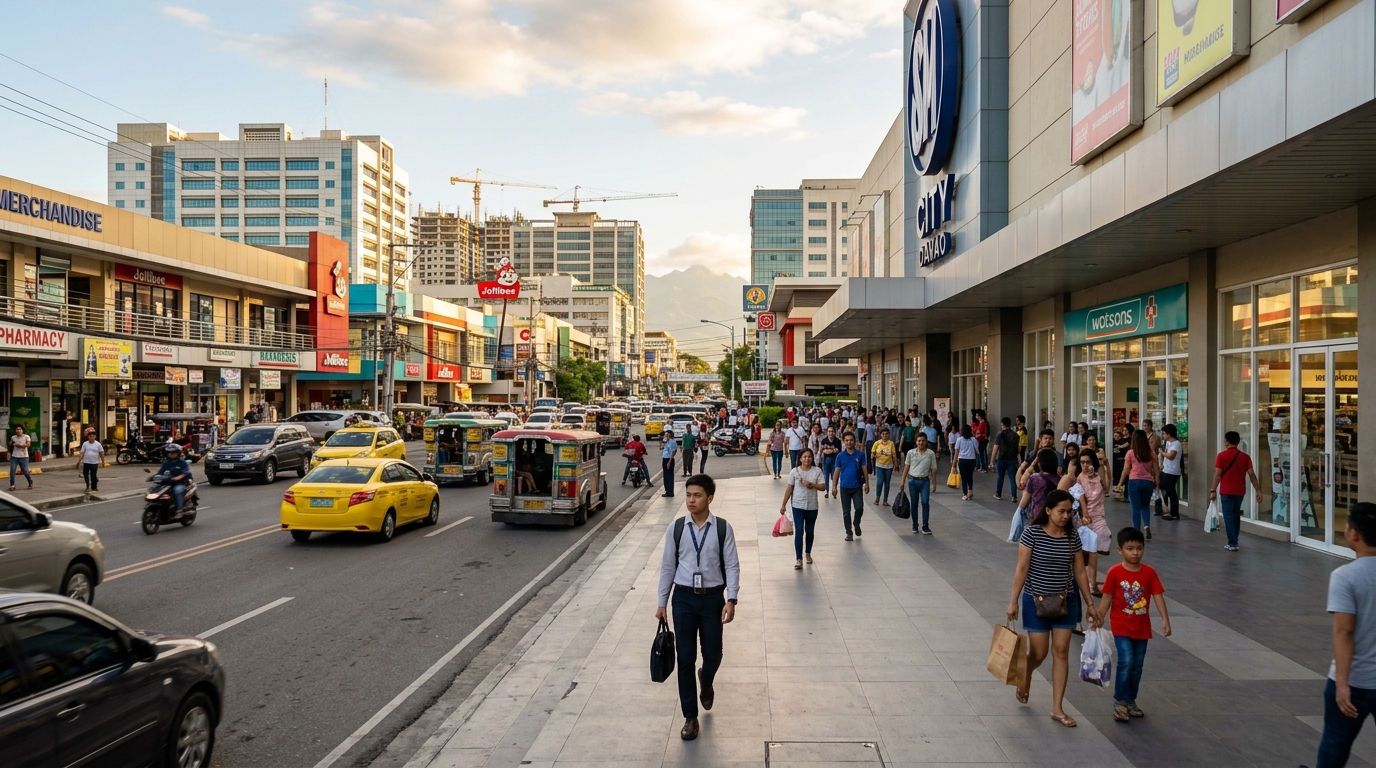
Davao — The city’s economic landscape is evolving as the city solidifies its role as the primary service and retail center for the entire Mindanao region. According to recent data from the Business One-Stop Shop, the city experienced a surge in applications from retail establishments and service contractors, pointing to a robust expansion in the local market. This trend is mirrored by the 2025 economic performance metrics, which show the services sector accounting for over 60 percent of the region’s economic output. The sustained interest from both local and national investors highlights the city’s reputation as an investment-friendly environment with a growing professional class.
Retail and Services Drive Regional Output
The growth in the city is primarily fueled by the wholesale and retail sectors, which form the backbone of the region's trillion-peso economy. Professional and business services are also seeing healthy increases, as the city attracts more talent and corporate headquarters looking for a strategic base in Mindanao. This shift towards a service-oriented economy provides a diverse set of opportunities for job seekers and entrepreneurs alike. The influx of new businesses is not only boosting local employment but also enhancing the variety of goods and services available to the residents.
Improving Efficiency for New Businesses
A key factor in this growth is the streamlined business registration process, which has significantly reduced the time and cost required to open a new venture. By implementing a digital-first approach in its One-Stop Shop, the local government has made it easier for small and medium-sized enterprises to formalize their operations. This efficiency is attracting an increasing number of startups that view Davao as an ideal location for testing new concepts and expanding into the broader Mindanao market. The city's proactive stance on business facilitation is a major selling point for prospective investors.
Investment-Ready Infrastructure
The city's strong revenue collection in recent years is being reinvested into infrastructure projects that further enhance the business climate. From improvements in transport connectivity to the modernization of public facilities, these investments are designed to support a larger, more active economic base. Leaders note that the current growth is sustainable because it is rooted in actual business activity and tax compliance rather than temporary incentives. As the city continues to build its capacity, it is increasingly becoming the destination of choice for regional commercial expansion.