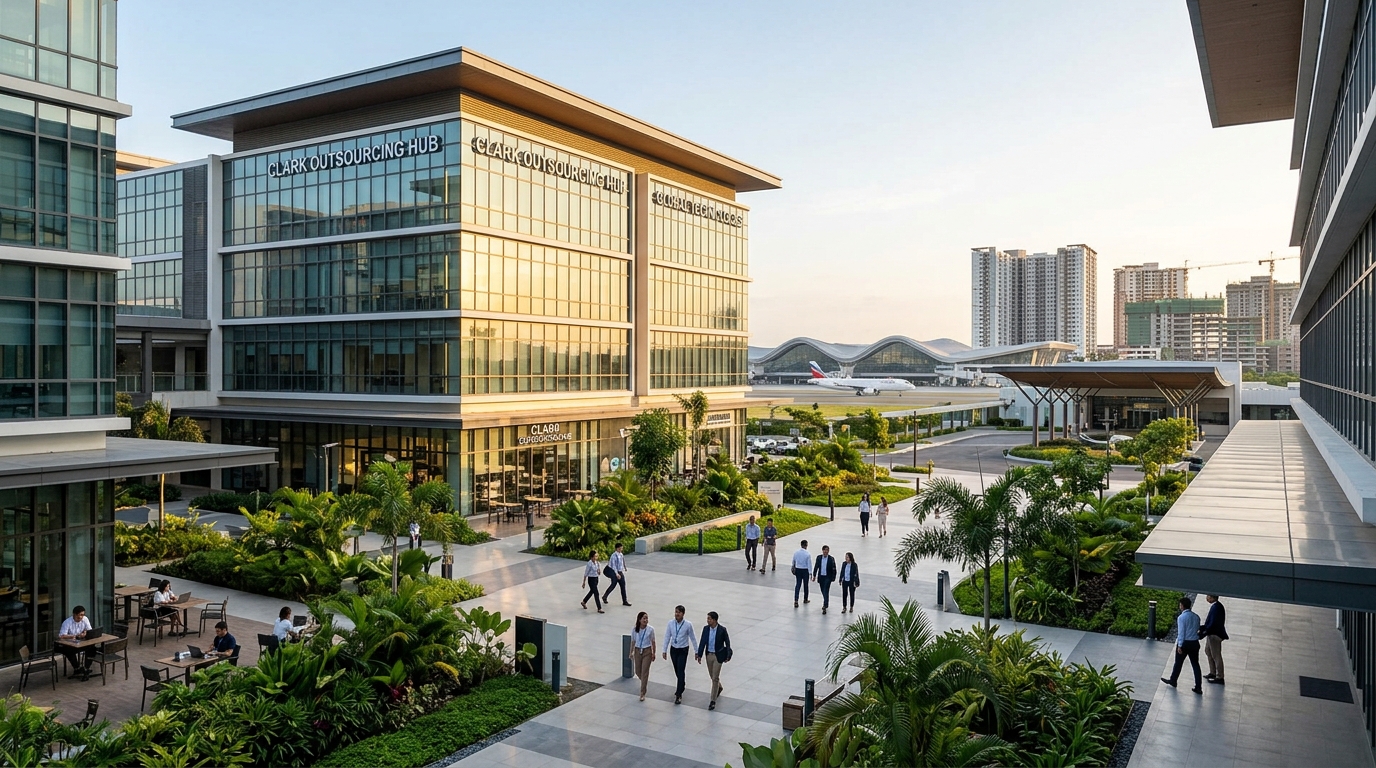
Colliers Research has reaffirmed Clark Freeport as the premier business address outside Metro Manila, citing its mature infrastructure, strategic proximity to the capital region, and international connectivity . The firm's market intelligence highlights how Pampanga remains an ideal location for developers planning to expand beyond the capital region, with Clark Freeport continuing to rise as a preferred business address benefiting from well-established infrastructure and world-class connectivity via Clark International Airport .
Data from Colliers' Q4 2025 report shows that provincial office takeup reached a record high of 242,900 square meters, with Pampanga among the key provincial hubs driving this growth alongside Cebu and Iloilo . This demand is primarily fueled by outsourcing expansions and traditional firms seeking alternatives to congested Metro Manila business districts. Colliers notes that Clark has emerged as a vital backup site for Metro Manila-based operations, offering business continuity and operational resilience that global enterprises increasingly prioritize.
Office Demand Surges as BPO and Traditional Firms Flock North
The numbers tell a compelling story about Clark's ascent. According to Colliers, provincial office takeup hit a record high of 242,900 square meters in 2025, with Pampanga positioned as one of the primary drivers of this growth . This surge reflects a broader shift as organizations increasingly look beyond Metro Manila to diversify delivery risk while maintaining performance, and Clark has emerged as a natural destination for sustainable offshore growth.
Clark's appeal is reinforced by its deep talent pipeline drawn from Pampanga and neighboring provinces, supported by leading universities producing graduates across finance, healthcare, technology, and back-office disciplines . The Clark Freeport Zone offers a stable economic environment with modern infrastructure, reliable utilities, and business-friendly policies that continue to attract major BPO locators and global enterprises . Colliers recommends that developers assess their provincial office pipelines and ensure timely delivery of office towers to cater to the sustained demand from outsourcing and traditional firms planning to expand in the countryside.
MICE Dominance and Infrastructure Drive Investor Confidence
Beyond office demand, Clark has solidified its status as a premier MICE (Meetings, Incentives, Conferences, and Exhibitions) destination, supported by the Clark International Airport and the Clark International Convention Center . Clark has earned recognition as Asia's Leading Meetings and Conference Destination and is the only destination in the Philippines that is part of the International Congress and Convention Association (ICCA), a key global network in the business events industry . The airport now handles up to eight million passengers annually and connects the region to 22 destinations with more than 300 weekly flights.
Major infrastructure investments continue to bolster Clark's position. The Clark International Airport recorded 2.75 million passengers in 2025, with international arrivals driving record hotel occupancy . National and international developers are aggressively rolling out new township phases, which include residential enclaves, commercial centers, and campus-style office districts . Major hospitality developments are also underway, including a Korean investor's P840‑million mixed-use expansion featuring 17 pool villas, a 15-storey tower, and two 12-storey buildings designed to expand Clark's 4,100-room hotel inventory . For Kapampangans, this translates to more job opportunities, sustained property value appreciation, and a growing sense that their province is becoming a true economic powerhouse north of Manila.