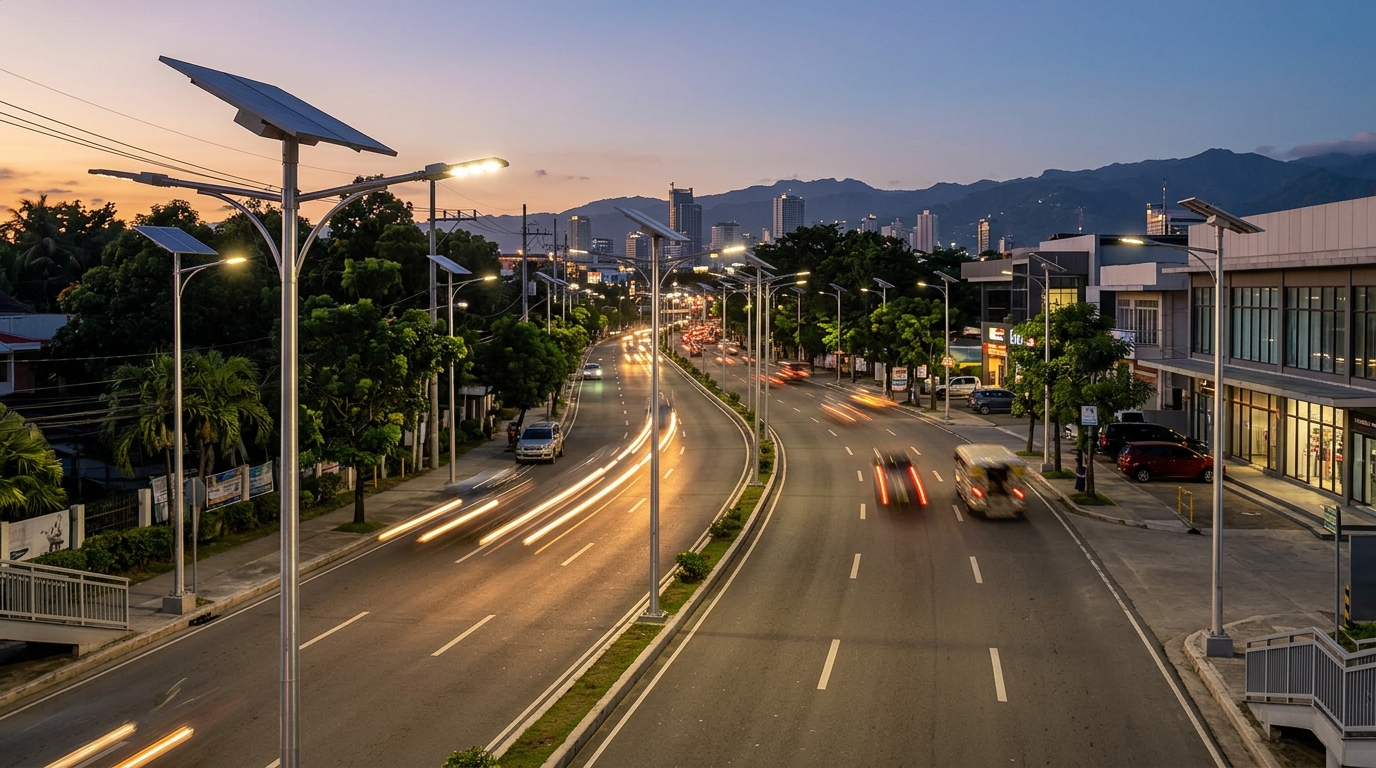
Cebu — The city is setting a new standard for sustainable urban governance, embarking on a major transition toward renewable energy that promises significant fiscal and environmental rewards. The city government has officially launched a P24.1 million solar street lighting project along the bustling Governor Cuenco Avenue, a key thoroughfare spanning from the Ayala Flyover to the Talamban Barangay Hall. By replacing traditional grid-reliant lighting with 350 high-efficiency solar-powered poles, the administration expects to slash electricity costs by approximately P4.2 million annually. This initiative not only illuminates the path to a greener city but also demonstrates a pragmatic commitment to long-term taxpayer savings and enhanced road safety.
A Smart Investment in Sustainable Infrastructure
The solar lighting upgrade is far more than an aesthetic improvement; it is a calculated effort to reduce the city’s reliance on conventional, expensive electricity. Each of the new 8-meter-tall poles features an advanced 18,000-lumen fixture designed for maximum visibility and safety. With the lights spaced roughly 30 meters apart, the project ensures a well-lit environment for both drivers and pedestrians, effectively discouraging crime and minimizing accident risks during nighttime travel. Beyond the immediate safety benefits, the system is built to last, backed by at least a five-year warranty and a design capable of functioning for up to seven rainy days at normal capacity.
The Bigger Picture: Cebu’s Renewable Roadmap
This street lighting endeavor is just one chapter in Mayor Nestor Archival’s broader "smart city" agenda, which aims to halve the city’s massive annual electricity bill within the next two years. The administration has already broken ground on solar rooftop projects for key government buildings—including the Executive and Legislative annexes—and has set its sights on integrating renewable power into facilities like the Cebu City Public Library and the Bagsakan complex. By leveraging these energy-efficient technologies and partnering with the Department of Energy, Cebu City is positioning itself as a regional benchmark for fiscal discipline and environmental stewardship. As more solar initiatives come online throughout 2026, the city is proving that economic growth and climate-positive action can go hand-in-hand.