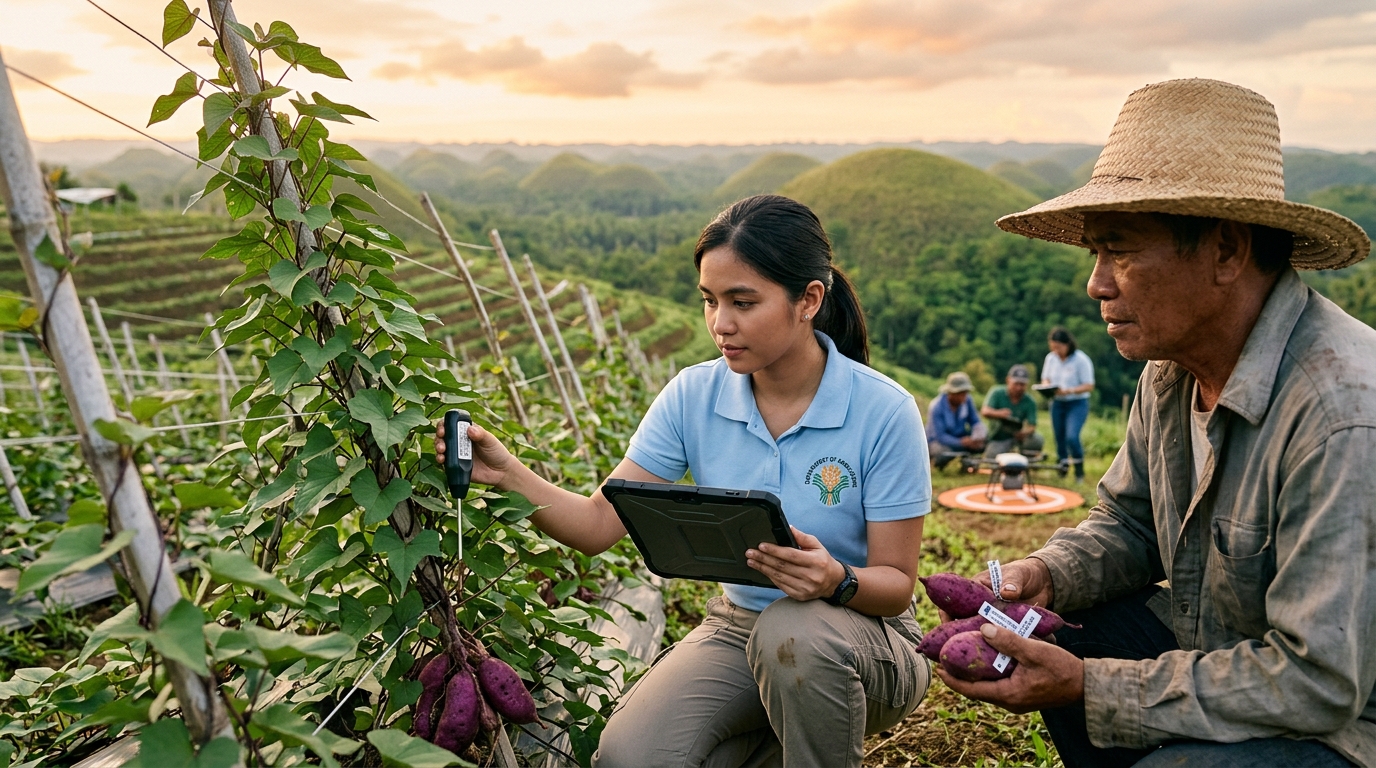
Bohol — The island is known as the country’s premier producer of purple yam, is currently implementing a major agricultural shift toward scientific propagation methods to meet rapidly growing international demand. Researchers from the Philippine Root Crop Research and Training Center (PhilRootcrops) are now working closely with local farmers to introduce advanced techniques such as minisett propagation and tissue culture. These methods aim to bypass the traditional, seasonal constraints that have long limited ube production to a single planting window each year. By moving toward these technology-driven practices, the province aims to significantly increase yields and solidify its position as the global authority on high-quality ube.
Overcoming Seasonal Limitations
Traditionally, Boholano farmers have been limited by the natural dormancy and growth cycles of the crop, which restricted planting to specific months. New research has proven that varieties such as Ubi Kinampay can be successfully propagated at different times of the year, provided that specific germinating protocols are followed. This shift is crucial for farmers who have traditionally faced lean seasons and unstable income. By allowing for a more flexible planting schedule, the province can ensure a more stable supply of ube to meet both domestic needs and export orders.
Efficiency Through Advanced Propagation
The introduction of the "minisett" method is a game-changer for small-scale farmers who previously had to sacrifice a large portion of their harvest just to create planting materials for the next cycle. This technique allows for the rapid multiplication of high-quality seeds from a single tuber, dramatically increasing the efficiency of farm operations. The transition to science-based practices also involves intensive training sessions for farmers, ensuring they understand the delicate hardening process required for laboratory-grown tissue cultures. These improvements are setting a higher standard for the industry, moving away from outdated, inefficient practices.
Cultivating a Global Agricultural Standard
This focus on modernization is vital if Bohol wishes to capitalize on the ongoing "purple craze" that has seen ube products featured on menus across the United States, Europe, and Asia. As international awareness of the Filipino crop continues to grow, it is essential that the source of that supply remains robust, scientific, and sustainable. The provincial government is fully supporting these initiatives, recognizing that high-quality production is the best way to maintain a competitive edge. The future of the local ube industry depends on the ability of farmers to embrace these changes, ensuring that the province remains the most trusted source of authentic purple yam.