Bohol has officially adopted the "Blue Economy" framework this April, focusing on the sustainable use of its ocean resources for economic growth. This strategy prioritizes marine conservation while expanding high-end, low-impact tourism in the Danajon Bank and Panglao marine sanctuaries.
The Ocean Stewardship Narrative
For Bohol’s coastal municipalities, the narrative is one of balancing profit with protection. The Blue Economy framework ensures that tourism developments—particularly in the diving sector—adhere to strict "No-Trace" policies to preserve coral health. This strategy attracts a more affluent, "green-conscious" traveler who is willing to pay a premium for verified sustainable experiences. For the 2026 traveler, a dive in Bohol is an investment in the long-term survival of one of the world’s only double-barrier reefs.
Certified Eco-Tourism and Local Livelihoods
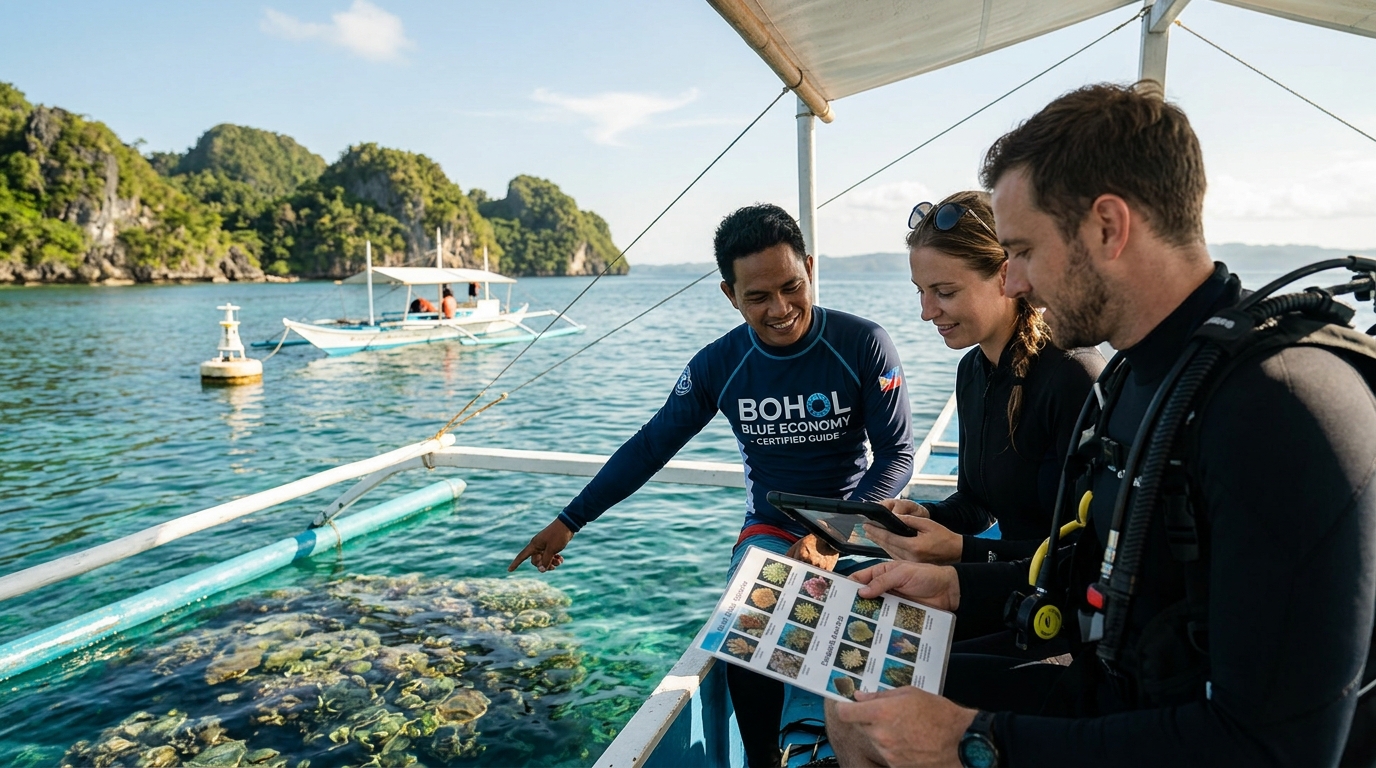
This movement is driving a professionalization of local boatmen and dive masters through global certification programs. By training local stakeholders as "Marine Guardians," the province ensures that the community is the primary beneficiary of conservation efforts. These certified guides provide educational tours that explain the geological significance of the Danajon Bank, enhancing the visitor's intellectual engagement. This model effectively turns fishermen into conservationists, providing a stable income that doesn't deplete marine stocks.
Marine Spatial Planning and Future Zoning
The provincial government is implementing advanced "Marine Spatial Planning" to prevent overcrowding in popular sites like Balicasag and Pamilacan. By using real-time data to monitor diver density, the authorities can divert traffic to lesser-known but equally beautiful reef systems. This "Density Management" ensures that the marine ecosystem remains resilient even as arrival numbers continue to climb. By 2027, Bohol aims to be the first province in the Philippines to achieve 100% "Blue Certification" for its coastal resorts.