



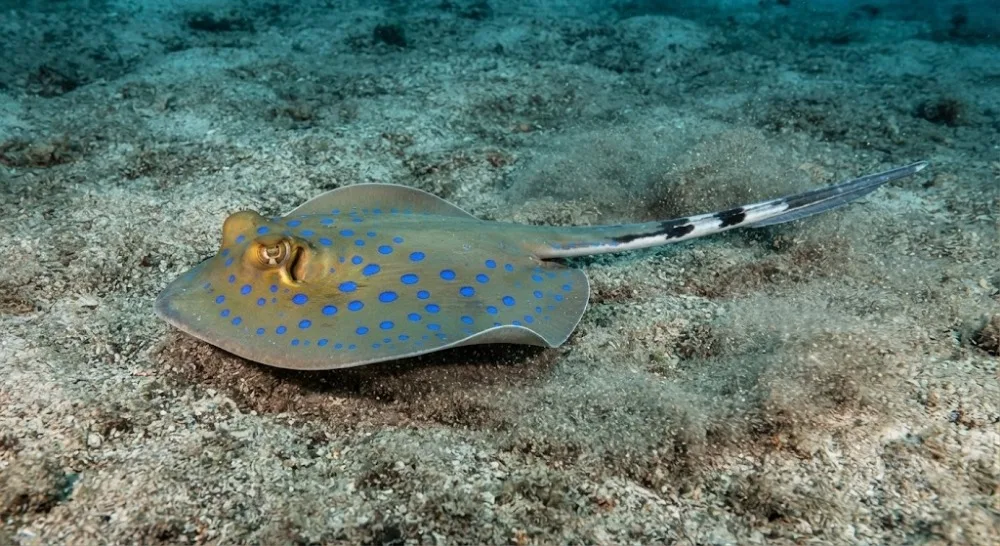
PALAWAN — Deep within the coastal waters of Honda Bay in Palawan, a fascinating study has shed light on the life of the elusive blue-spotted maskray (Dasyatis kuhlii). By analyzing specimens collected from the local fish landings in Barangay Tagburos, Puerto Princesa City, researchers have provided a rare, data-backed glimpse into the feeding habits and physical growth patterns of this unique marine inhabitant. This investigation is essential for understanding how the local marine ecosystem functions and how these bottom-dwellers contribute to the biodiversity of Palawan’s world-renowned waters. Such findings offer invaluable insights for both marine biologists and local conservationists who work to protect the delicate balance of our island’s aquatic life.
Identifying The Primary Dietary Preferences In Local Marine Habitats
The study revealed that polychaetes serve as the most significant dietary component for the blue-spotted maskray in Honda Bay, suggesting a high abundance of these organisms in the local seafloor. By examining the stomach contents of 62 specimens, researchers identified five distinct groups of prey, ranking them through the Index of Relative Importance to determine their contribution to the ray's nutritional intake. This discovery is vital as it highlights the specific ecological niche this species occupies, effectively acting as a key predator of benthic invertebrates. Understanding what these rays consume helps local experts better comprehend the health and composition of the seabed environments near popular tourist spots and coastal fishing grounds.
Analyzing Physical Development Through Length And Weight Metrics
To better understand the growth patterns of the population, scientists applied statistical methods to measure the relationship between the ray's disc width and its total weight. Specimens were categorized into small, medium, and large groups—ranging from 18 to 40.10 cm—to observe how their dietary needs and physical characteristics shifted as they matured. This analytical approach provides a reliable framework for assessing the robustness of the ray population, which is crucial for monitoring the long-term impact of environmental changes on the region’s marine resources. By using these measurements, researchers can effectively track how the species adapts its growth cycles to the conditions of its habitat.
Evaluating The Overall Condition Of The Local Ray Population
Beyond diet and growth, the investigation established a specific condition factor, a metric that indicates the general physical well-being of the fish based on their weight relative to their length. A higher condition factor typically suggests that the environment is providing sufficient food and healthy conditions for the species to thrive. This data is incredibly useful for Palawan’s environmental managers, as it serves as a baseline for measuring the vitality of the local ecosystem in the face of increasing tourism and coastal activity. By keeping track of these biological markers, researchers can ensure that the iconic marine life of Puerto Princesa remains healthy, vibrant, and well-protected for future generations of visitors and locals to admire.
