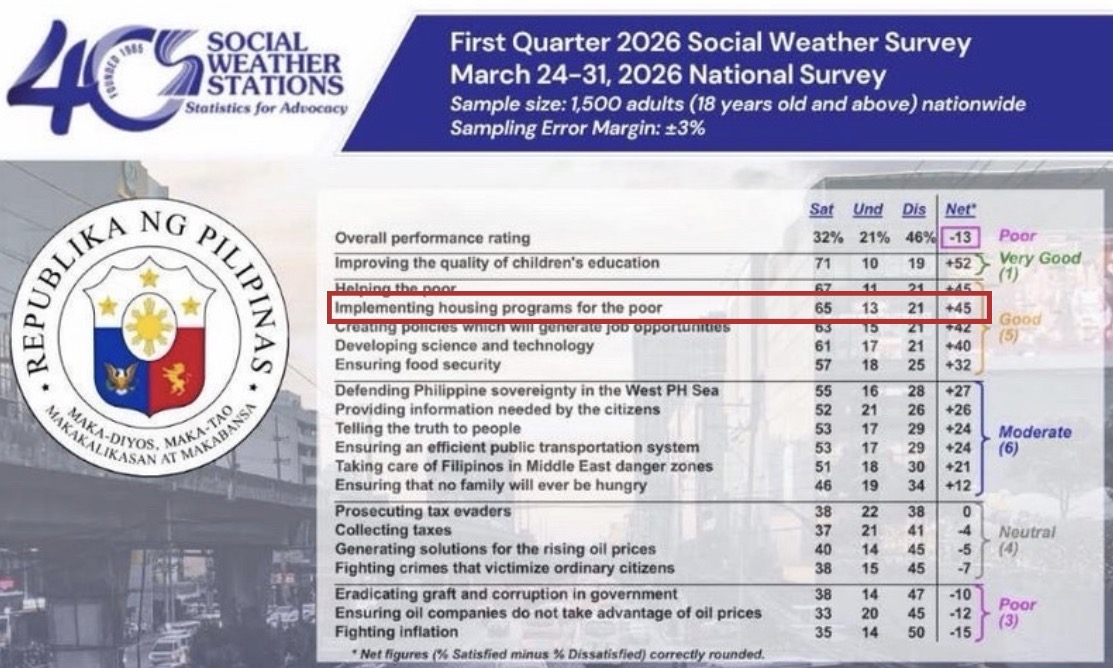
PHILIPPINES — The administration’s pro‑poor housing program posted a seven‑point gain in the latest Social Weather Stations survey, earning a “good” net satisfaction rating of +45. The result reflects growing public approval that directly strengthens the real estate sector’s outlook on affordable housing.
A Survey Boost That Matters to Developers
The First Quarter 2026 SWS National Survey, conducted from March 24 to 31, showed the housing sector climbing from a moderate +38 in November 2025 to +45. The improvement signals that more Filipinos are feeling the impact of the Expanded Pambansang Pabahay para sa Pilipino (4PH) Program. For developers, high public satisfaction translates into stronger demand and buyer trust.
Department of Human Settlements and Urban Development Secretary Jose Ramon Aliling welcomed the results as validation of the program’s recalibration. Since assuming office in May 2025, he expanded the initiative from a single vertical‑condominium model into a multi‑modality platform. The shift now includes rental housing, horizontal developments, and a revived community mortgage program.
Multiple Pathways to Homeownership
The expanded approach has unlocked new segments of the property market. Rental housing projects, currently numbering 3,590 units under construction nationwide, cater to informal settlers and young workers not yet ready to purchase. Horizontal developments offer lot‑based options for families seeking ground‑level living.
The Enhanced Community Mortgage Program has already approved 45 projects benefiting over 27,000 individuals. These beneficiaries gain legal land tenure, transforming them from informal occupants into recognized homeowners. For the real estate industry, secure tenure fuels incremental housing improvements and stimulates the local construction economy.
Bayanihan Villages, using modular shelter units, address the immediate needs of disaster‑displaced families. These transitional homes provide dignity while permanent housing is prepared. Each modality opens a different pipeline for construction activity, materials supply, and professional services.
Private Sector Takes Notice
Colliers Philippines Research Director Joey Roi Bondoc noted during the first‑quarter property market briefing that the Expanded 4PH is “doing wonders for the condominium market, specifically for the urban poor and low‑income earners.” He pointed to the synergy between government‑led policy, active local government participation, and private sector innovation.
This alignment is rare in emerging markets and signals a maturing housing ecosystem. Developers who once concentrated on high‑end projects are now exploring partnerships for mid‑rise socialized condominiums under the 4PH umbrella. The program’s rising public satisfaction score gives them the confidence to commit capital to affordable segments.
Tangible Results on the Ground
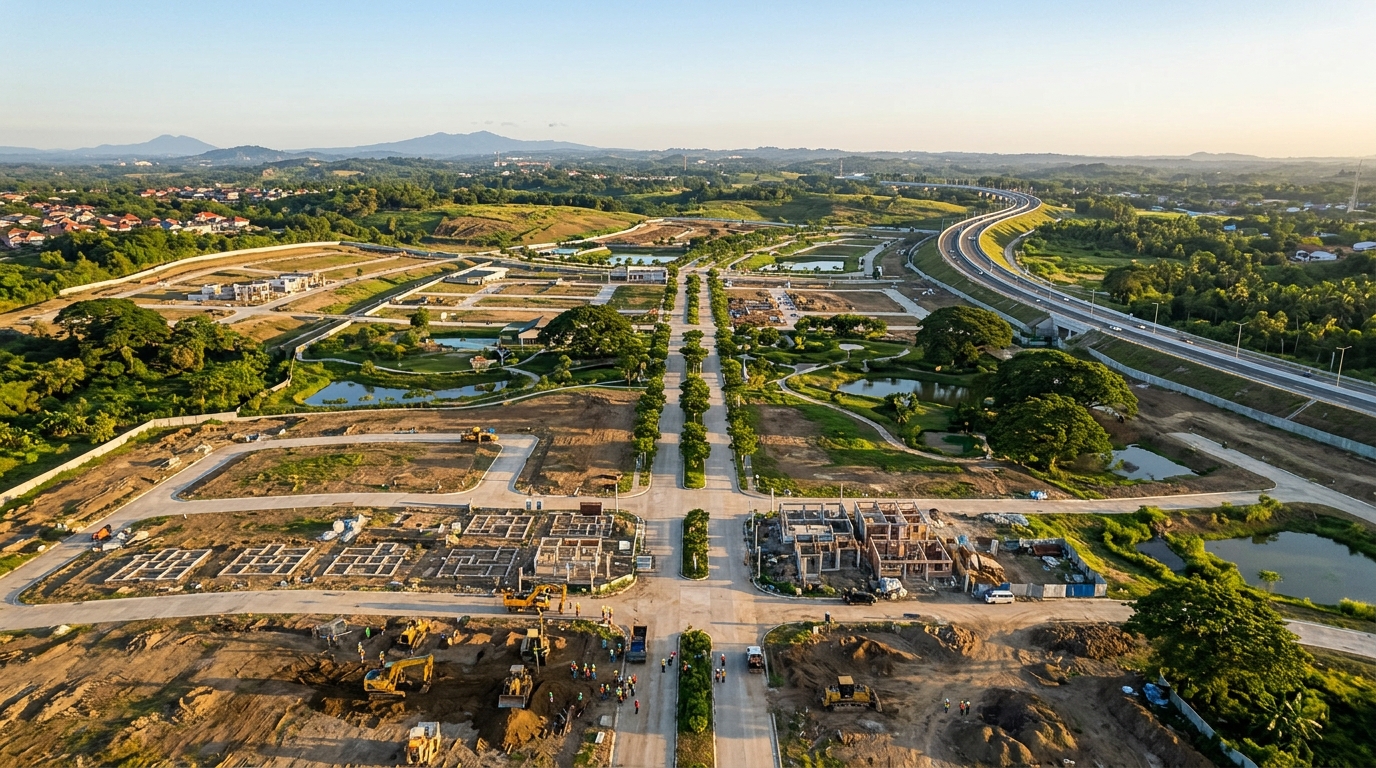
The survey gains are backed by visible project completions. In Naga City, Secretary Aliling and Mayor Leni Robredo recently turned over 101 modular housing units at a Bayanihan Village, with 300 planned in total. They also broke ground on the city’s first rental housing project and awarded ₱26 million in community mortgage checks.
Robredo described the national housing push as an aggressive program for homeless and underserved families. Her endorsement, coming from a prominent local leader, adds political weight to the administration’s claims. Such high‑profile validations encourage other local governments to fast‑track their own housing proposals.
The Presidential Commission for the Urban Poor also conferred the Bayani ng Urban Poor Award 2026 on Secretary Aliling. The recognition underscores the institutional momentum building behind the housing agenda. Awards and survey results together create a narrative of competence that reassures both voters and investors.
Sustaining the Momentum
Secretary Aliling affirmed that the department remains committed to accelerating housing delivery. He said the government will continue partnering with public and private stakeholders to bring dignified living to more Filipinos. For real estate professionals, this commitment means a predictable pipeline of projects and a growing market of qualified, government‑assisted buyers.
The SWS survey results serve as a barometer not just of political popularity but of real‑world housing impact. As satisfaction rises, so does the likelihood that families will take the leap into homeownership. The 4PH program, once a campaign promise, is now a measurable force shaping the Philippine property landscape.