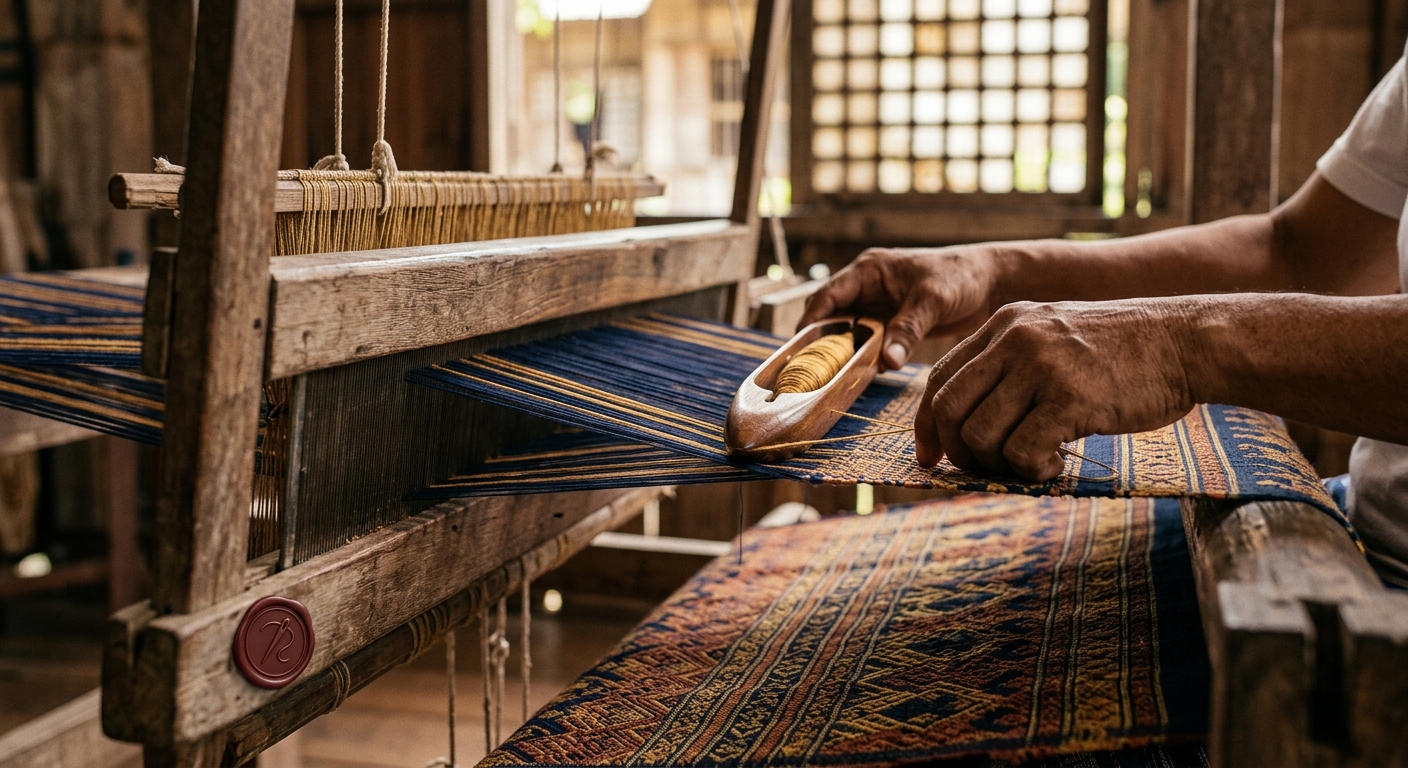
ILOILO CITY — The centuries‑old tradition of Iloilo Hablon weaving is poised to receive legal protection that will distinguish authentic Ilonggo textiles from imitations worldwide. On May 28, 2026, the Iloilo Weavers Association and the Department of Trade and Industry’s Iloilo Provincial Office convened at the DTI office to advance applications for a collective mark and geographical indication for Iloilo Hablon. The initiative seeks to cement the textile’s identity as a product uniquely tied to the province’s soil, skill, and cultural memory.
DTI Iloilo officer‑in‑charge Provincial Director Ma. Dorita D. Chavez led the discussions, which brought together weavers from Miagao, Oton, Badiangan, Tigbauan, Dueñas, and Iloilo City. Marianne Tajanlangit‑Bebit, an intellectual property rights specialist from the Intellectual Property Office of the Philippines, outlined the requirements and processes for securing both protections. Representatives from the Local Economic Development and Investment Promotion Offices of Iloilo City and the province also joined the meeting, reflecting a coordinated government push to safeguard the weaving heritage.
What Geographical Indication Means for the Traveler
A geographical indication identifies a product as originating from a specific territory where its quality or reputation is essentially linked to its geographic origin. For tourists, a GI tag on Iloilo Hablon guarantees authenticity. Visitors purchasing a handwoven shawl or table runner from a Miagao weaver can be certain they are buying a genuine Ilonggo product, not an imitation produced elsewhere. This protection elevates the souvenir from a generic purchase to a verified piece of cultural heritage.
The collective mark functions as a shared brand identity, signaling that the product meets defined standards of quality and origin. For the weavers, these registrations are expected to reinforce the distinct identity of Iloilo Hablon, protect local artisans from imitation products, and create greater opportunities for market expansion. For the tourism sector, the legal safeguards strengthen the appeal of cultural tourism. Travelers increasingly seek authentic, place‑based experiences, and a legally protected textile offers a tangible connection to the destination’s heritage.
A Weaving Tradition Supported by Government and Community
The DTI has reinforced the weaving sector through skills enhancement programs, product development activities, market linkage initiatives, and the provision of weaving equipment under the Shared Service Facility Project. These interventions complement the IP protection efforts, ensuring that weavers not only have the legal tools to protect their craft but also the practical support to produce competitively.
The initiative aligns with Iloilo’s broader cultural tourism strategy. The city already hosts the Living Heritage Museum Experience, the Commonwealth Dinner Night, and the Calle Real heritage corridor. Adding IP‑protected Iloilo Hablon to this portfolio deepens the visitor experience. A tourist walking through the Terminal Market or a Miagao weaving center can now purchase a textile whose authenticity is legally guaranteed, whose provenance is documented, and whose purchase directly supports the artisan community that sustains the tradition.