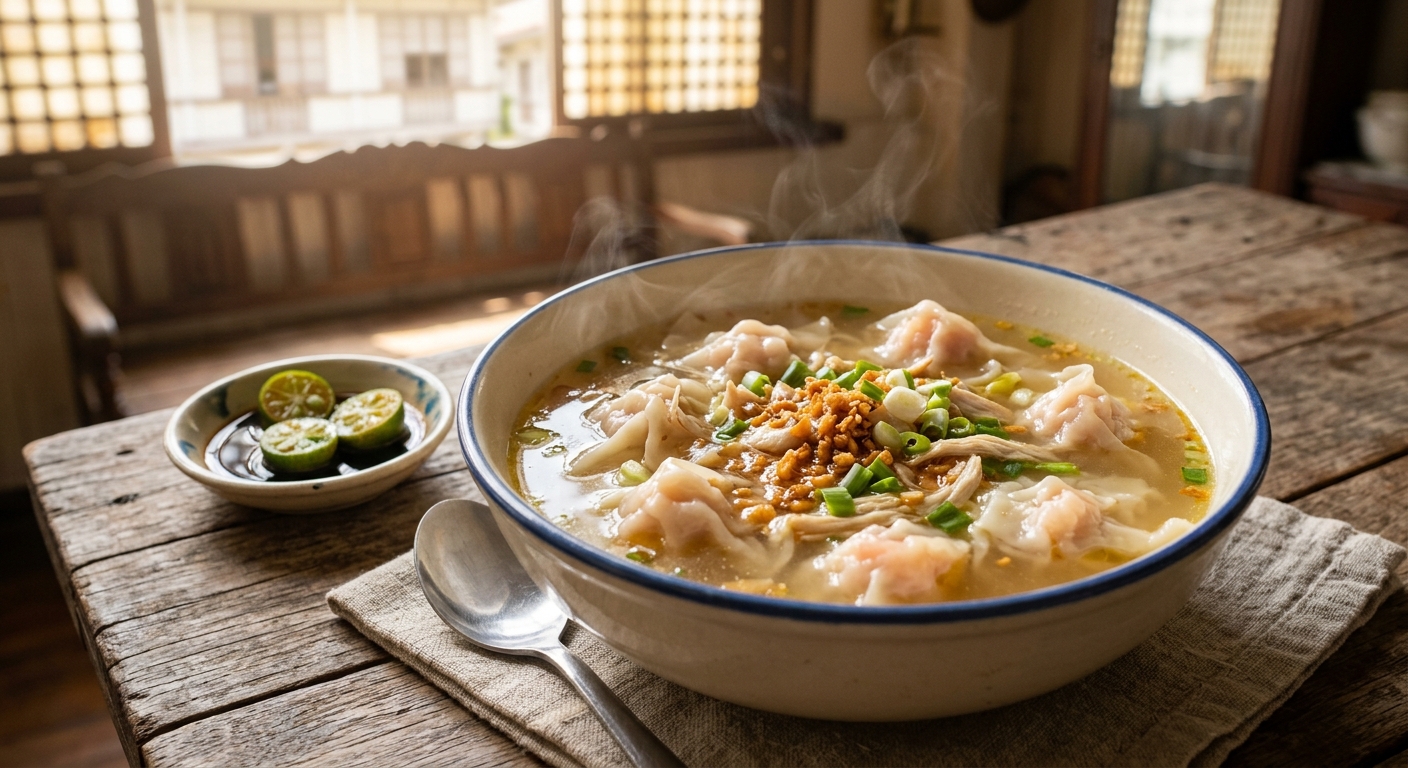
ILOILO CITY — There is a quiet genius to Pancit Molo, a dish whose name deceives. Despite the "pancit" in its title, this comforting bowl contains no noodles. Instead, thin, delicate wrappers enclose a juicy filling of ground pork, shredded chicken, and shrimp, all swimming in a rich, hours-long simmered broth of native chicken and pork bones. Born in Iloilo's Molo district, the city's historic Chinese quarter, it is the quintessential story of how immigrant food becomes unmistakably Filipino.
The dish traces its lineage directly to Chinese wonton soup, adapted by the large Chinese community that settled in the "Parian" district of Molo during the Spanish colonial era. Over generations, it evolved from a home‑cooked staple into a culinary icon so central to Ilonggo identity that it was prominently featured during the nationwide celebration of Filipino Food Month in April 2026. This year, it also starred in Iloilo's showcase at the International Cities of Gastronomy Fest in Macau.
The Two Faces of an Icon
Today, two very different institutions in Molo represent the contrasting ways to experience this soup, each telling its own story about the city. Kap Ising's Pancit Molo is the people's champion. What began in the 1980s as a small family venture exploded under Eliezer "Kap Ising" Villanueva, a former barangay captain who took over in 2006 and started selling at government offices. Today, an estimated 30,000 molo balls are crafted daily by about 20 workers.
Kap Ising's is everywhere—from its roots in Plaza Molo to Ayala Malls Atria and SM City's food court. Despite its scale, the business refuses to franchise, insisting the delicate art of making molo wrappers is too labor‑intensive to standardize. "Hindi ako bumibili ng imported. Kailangan bagong katay," Kap Ising says, demanding only the freshest, locally butchered ingredients. A bowl sells for around ₱70, with margins intentionally kept low.
The Keeper of the Old Soul
In stark contrast, Panaderia de Molo operates from an old family home on Avanceña Street, representing restraint and exclusivity. Its refined, clear version of pancit molo is sold in small, measured quantities, targeting what its operator calls an "affluent market." The experience is intimate and ritualistic, where memory and tradition are as important as the food itself.
The setting reflects a philosophy that resists mass production. Products are sold in limited batches, with production costs limiting even the use of its iconic tin cans. Where Kap Ising's has democratized the dish, Panaderia de Molo has preserved its old‑world soul, creating two complementary pillars of a single culinary tradition.
Protecting a Legacy
As Pancit Molo gains international recognition, efforts are underway to protect its heritage. The University of the Philippines Visayas is conducting an academic study documenting the origins and development of popular Iloilo soups, including Pancit Molo. There is also a growing movement to secure a Geographical Indication registration for the dish, which would legally protect its name and ensure only those made in Iloilo can be called "Pancit Molo." For Iloilo, the country's first UNESCO Creative City of Gastronomy, the soup is more than a meal. It is a taste of history, a symbol of cultural fusion, and a legacy worth safeguarding.