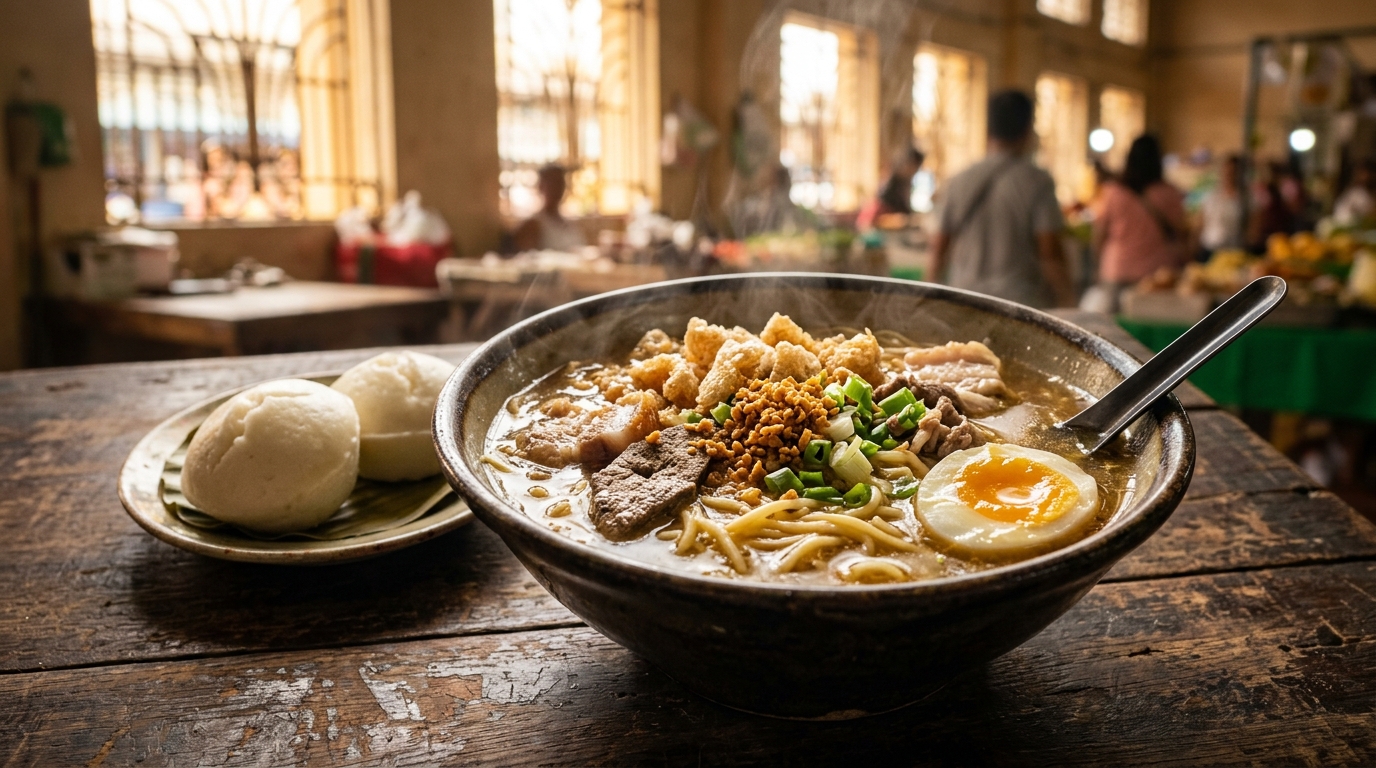
ILOILO CITY — Before dawn breaks over the La Paz Public Market, the vats are already simmering. Pork bones, marrow, and beef shanks have been trading their secrets to the water for hours, building a broth so deep and savory that its aroma alone pulls market vendors and early risers toward the stalls like a quiet command. By six in the morning, the first bowls are being assembled: a tangle of fresh miki noodles, slices of tender pork and liver, a ladleful of that golden stock, and a final avalanche of crushed chicharon, toasted garlic, and scallions. This is La Paz Batchoy, and it is not simply a dish. It is the flavor of Iloilo itself.
Named after the district where it was born, batchoy has become the cornerstone of the city's identity as a UNESCO Creative City of Gastronomy—the first in the Philippines. Travelers who come for the Spanish-era churches and the Esplanade leave haunted by the memory of this bowl. It is at once a comfort food, a point of civic pride, and an heirloom whose recipe has been guarded for nearly a century. In 2026, as Iloilo accelerates into its future, the dish finds itself at the center of a movement to protect its past.
A Legend Born in the Public Market
The origin of batchoy is a story as layered as its broth. The most widely accepted version begins with Federico "Deco" Guillergan Sr., a butcher at the La Paz Public Market who, in 1938, began selling a simple soup of boiled meat and bone marrow broth for 20 centavos a bowl. When customers asked for something more substantial, he added noodles. The result would become known as the original batchoy, and Deco's name would outlive him.
Another formidable lineage belongs to Teodorico "Ted" Lepura, who learned a batchoy recipe from a Chinese merchant in the early 1930s and opened Ted's Oldtimer La Paz Batchoy in 1945. Some accounts even reach back to 1922, citing Inggo's Batchoy as the earliest stall. What is certain is that by the mid‑20th century, batchoy had become the defining dish of the district, a humble market soup elevated to a civic treasure.
The Anatomy of a Perfect Bowl
What makes an authentic La Paz Batchoy is not a single ingredient but a symphony of distinct elements, each playing an irreplaceable role. The soul of the dish is the broth—a clear, complex stock made by simmering pork and beef bones with marrow for hours. The foundation is fresh, chewy miki, round egg noodles that hold their texture against the heat. The heart comes from tender pork meat, liver, and intestines, while the crunch arrives through crushed chicharon, toasted garlic, and chopped spring onions.
A key, closely guarded ingredient is guinamos—local fermented shrimp paste—which provides the soup's signature savory depth. Many locals finish the bowl by cracking a raw egg into the hot broth, letting it cook gently while they eat. On the side, steamed puto provides a soft, mildly sweet counterpoint. The result is a balance of salty, savory, fatty, and crunchy notes that TasteAtlas, the international food database, declared the world's best offal soup in late 2024, giving it a 4.1‑star rating.
The Race to Protect a Heritage
For all its global acclaim, La Paz Batchoy now faces a quiet crisis. As the dish spreads beyond Iloilo—appearing on menus from Manila to Davao—the city is racing to protect its authenticity. In 2026, the Iloilo City Government, the University of the Philippines Visayas, and national agencies are actively pursuing a Geographical Indication registration for the dish. A GI tag, similar to those protecting Champagne or Parmigiano Reggiano, would legally ensure that only batchoy made in Iloilo according to specific traditions can bear the name "La Paz Batchoy."
The initiative is part of "Project 2: Namit Gid!"—Hiligaynon for "It is really delicious"—a comprehensive research study by UPV documenting the dish's history, value chain, and potential future. Mayor Raisa Treñas has called batchoy "not just a culinary staple but an important symbol of the Ilonggo identity and heritage." The project draws inspiration from other GI‑registered Philippine products, such as Guimaras Mangoes and Aklan Piña, which have seen farmgate prices rise and cultural pride swell since their registration.
Where the Legends Still Stand
To taste batchoy at its source is a pilgrimage worth making. The La Paz Public Market, which underwent a comprehensive redevelopment and reopened in December 2025, now blends art deco architecture with modern amenities while retaining its authentic charm. It is here that the "Big Four" stalls continue to define the batchoy experience.
Deco's Original La Paz Batchoy, dating to 1938, is credited by many as the true originator. Its broth is known for being clean and rich without being oily, and in 2026, under new CEO Marichel Magalona, it launched a "Batchoy Kit" while keeping the 88‑year‑old recipe sacred. Ted's Oldtimer La Paz Batchoy, founded in 1945, is now the Philippines' largest batchoy chain with over 20 locations nationwide, its broth generally described as sweeter than its rivals.
Netong's Original Special La Paz Batchoy, a third‑generation stall operating since 1948, maintains the original, saltier profile. Its owner has expressed a desire for Michelin recognition, and its "Mega Bowl"—which includes bone marrow—is a highlight. Popoy's Original La Paz Batchoy, founded in 1959, offers a unique milky‑creamy broth that remains consistent from first spoonful to last. While rooted in the Central Market, Popoy's has expanded to SM City Iloilo and Robinsons Place.
How to Eat Batchoy Like an Ilonggo
There is an art to eating batchoy, and locals observe it with quiet precision. The bowl never arrives alone; a side of steamed puto is essential, its soft sweetness balancing the savory broth. A raw egg, cracked into the hot soup to cook slightly, adds richness. The true insider move is the "ask for extra soup" technique: eat the noodles and meat first, then request a free extra serving of hot broth to finish.
Most stalls open as early as 6:00 a.m., making batchoy a legitimate breakfast option. Mid‑morning or late afternoon is the ideal window to avoid the lunch rush. For the most authentic experience, head to the La Paz Public Market itself, where the redeveloped stalls retain the soul of the original, and the steam rising from the vats is the same steam that has risen there for nearly a century.
From its 20‑centavo origins to its status as the world's best offal soup, La Paz Batchoy has carried Iloilo's name across the globe. It has appeared at the International Gastronomy Promenade in Macau, graced high‑profile Independence Day spreads in Manila, and been celebrated by food critics from Tokyo to New York. Yet its truest expression remains exactly where it began: in a bowl, in a market, in the heart of Iloilo City, waiting for the first customer of the morning to take a spoonful and discover what Ilonggos have known since 1938.