MAKATI CITY — Department of Tourism (DOT) Secretary Dita Angara-Mathay expressed confidence in the strength of the Philippine tourism industry despite ongoing global uncertainties, saying demand for travel remains steady even as international conditions become more challenging.
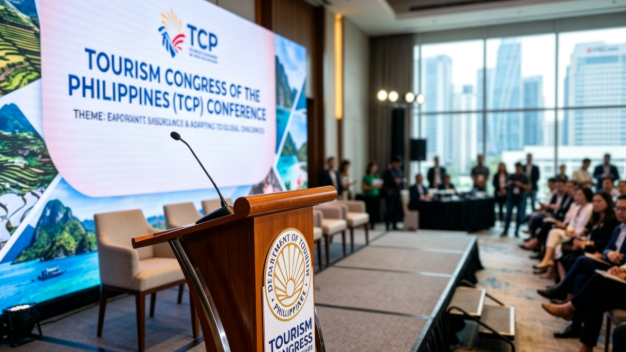
Speaking during the Tourism Congress of the Philippines (TCP) conference on tourism resilience held in Makati City, the newly appointed tourism chief shared an optimistic outlook on the sector’s current performance. From January to April 27, 2026, the country recorded 2.24 million foreign visitor arrivals, reflecting an increase of nearly 9 percent compared to the same period last year. According to Angara-Mathay, the figures show that tourism demand continues to remain strong, although travelers today have become “more sensitive, more selective, and more dynamic” in their decisions.
Domestic Travel as the Industry’s Stabilizing Force
While international arrivals continue to grow, the DOT acknowledged that the tourism industry is still adjusting to shifting global conditions. Angara-Mathay noted that the sector has experienced slower booking conversions, more cautious traveler behavior, and cancellations in certain markets.
To address these challenges, the tourism secretary emphasized the importance of domestic travel as a stabilizing force for the industry. She explained that local tourism has become the backbone of the sector during times of global uncertainty while also helping drive economic activity in regional communities. Among the DOT’s planned initiatives are the strengthening of regional travel circuits, promotion of short-break destinations, and expansion of community-based tourism, cultural tourism, and wellness experiences. These efforts aim to keep tourism a dependable source of income and employment for millions of Filipinos even during periods of international instability.
Makati’s Role in Shaping Tourism Policy
The Tourism Congress of the Philippines conference was held in Makati City, a location officials considered fitting because of its role as the country’s leading financial and business center. With its strategic location, modern infrastructure, and concentration of major industry stakeholders, Makati continues to serve as an important venue for national tourism discussions and policy planning.
More than 300 tourism industry representatives attended the conference, where Angara-Mathay highlighted the importance of viewing tourism as a broader ecosystem connected to investment, infrastructure, enterprise development, supply chains, and market access. Her remarks reflected the need for a more comprehensive and coordinated approach to tourism development, particularly as the industry adapts to evolving market conditions.
Strategic Plans for Long-Term Tourism Growth
During the conference, the DOT chief also discussed the agency’s long-term priorities, which include improving connectivity, strengthening destination readiness, facilitating investments, simplifying travel entry processes, and focusing on priority international markets. The DOT identified China, India, Japan, South Korea, Taiwan, Southeast Asia, North America, Australia, and Europe among its key target markets, with strategies tailored to demand trends and travel connectivity. The department is likewise prioritizing high-value tourism segments such as meetings, incentives, conferences, and exhibitions (MICE), culture and heritage tourism, gastronomy, wellness tourism, farm tourism, agri-tourism, and cruise tourism to encourage longer stays and greater economic impact.
Angara-Mathay acknowledged that infrastructure improvements and investment reforms will require time and cooperation from stakeholders, but assured industry leaders that efforts to strengthen the tourism sector are already underway. Tourism currently contributes nearly 9 percent to the country’s gross domestic product and supports approximately 6.75 million jobs, making the continued stability and growth of the industry a major economic priority for the government.