BOHOL — Gov. Erico Aristotle Aumentado has formally asked the national government to include Bohol–Panglao International Airport among the authorized entry points under the country's 14‑day visa‑free arrangement for Chinese travelers. The request, submitted to both the Department of Foreign Affairs and the Department of Tourism, seeks to bypass Manila and Cebu, allowing Chinese tourists to fly directly into Bohol.
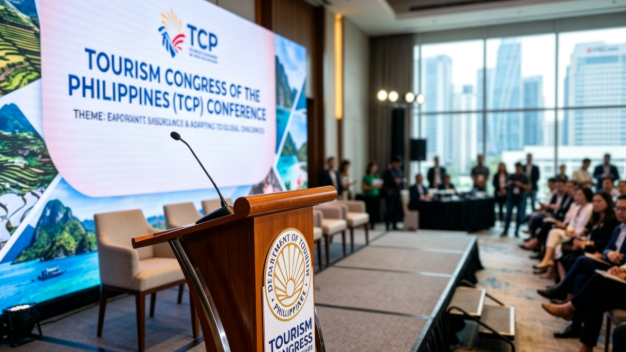
Aumentado made the pitch personally during a visit to the DOT national office in mid‑May. "We requested Tourism Secretary Bernardita Angara‑Mathay to allow a Visa Upon Arrival scheme in Bohol to make it easier for tourists to visit us," the governor said. He also chairs the Provincial Tourism Council and has been coordinating with Aboitiz InfraCapital, which manages the airport, to prepare the necessary submissions.
China Wants the Door Open, Too
The proposal has already received a clear push from the other side. Chinese Ambassador Jing Quan, speaking at the Love Boracay 2026 tourism event in late April, said China is exploring the possibility of expanding visa‑free entry to Bohol and Boracay. "When we bring more people to visit each other's country, they will share their stories, and that will encourage more tourists," he said.
Both governments appear to want the same outcome. The Philippines earlier this year made Chinese nationals eligible for a 14‑day visa‑free stay, but entry is currently limited to Manila and Cebu. Bohol officials are arguing that BPIA, the country's ninth‑busiest gateway and first eco‑airport, should be added to that list.
A Market the Province Cannot Afford to Lose
From 2022 to 2025, approximately 146,000 Chinese tourists visited Bohol, making China the province's second‑largest international market. BPIA handled 2.22 million passengers in 2025, with foreign arrivals rising 14.75 percent year‑on‑year. Those numbers are now the backbone of the governor's pitch.
The push for direct flights extends beyond China. Cebu Pacific, Japan Airlines, Philippine Airlines, and Korean Air are all expanding routes into Bohol from Narita, Incheon, Honolulu, and Sydney. A chartered flight carrying 163 Japanese tourists from Narita landed on May 2, the first direct Japan‑Bohol service. Aumentado said the province is working to replicate that success with other Asian markets.
A UNESCO Geopark Wants to Be a Gateway
Bohol's bid aligns with its Strategic Governance Roadmap and its status as a UNESCO Global Geopark. The provincial government argues that direct international processing at BPIA would distribute tourism spending beyond Manila and Cebu, converting Bohol from a secondary destination into a primary gateway.
Preparations are ongoing with support from the DOT, the Sangguniang Panlalawigan, and the League of Municipalities of the Philippines. Aumentado expressed optimism that BPIA would soon be designated as an authorized entry point. For a province whose beaches, dive sites, and Chocolate Hills already draw global acclaim, the visa‑free proposal is the missing piece—one that could turn Bohol from a place tourists visit into a place they fly to first.