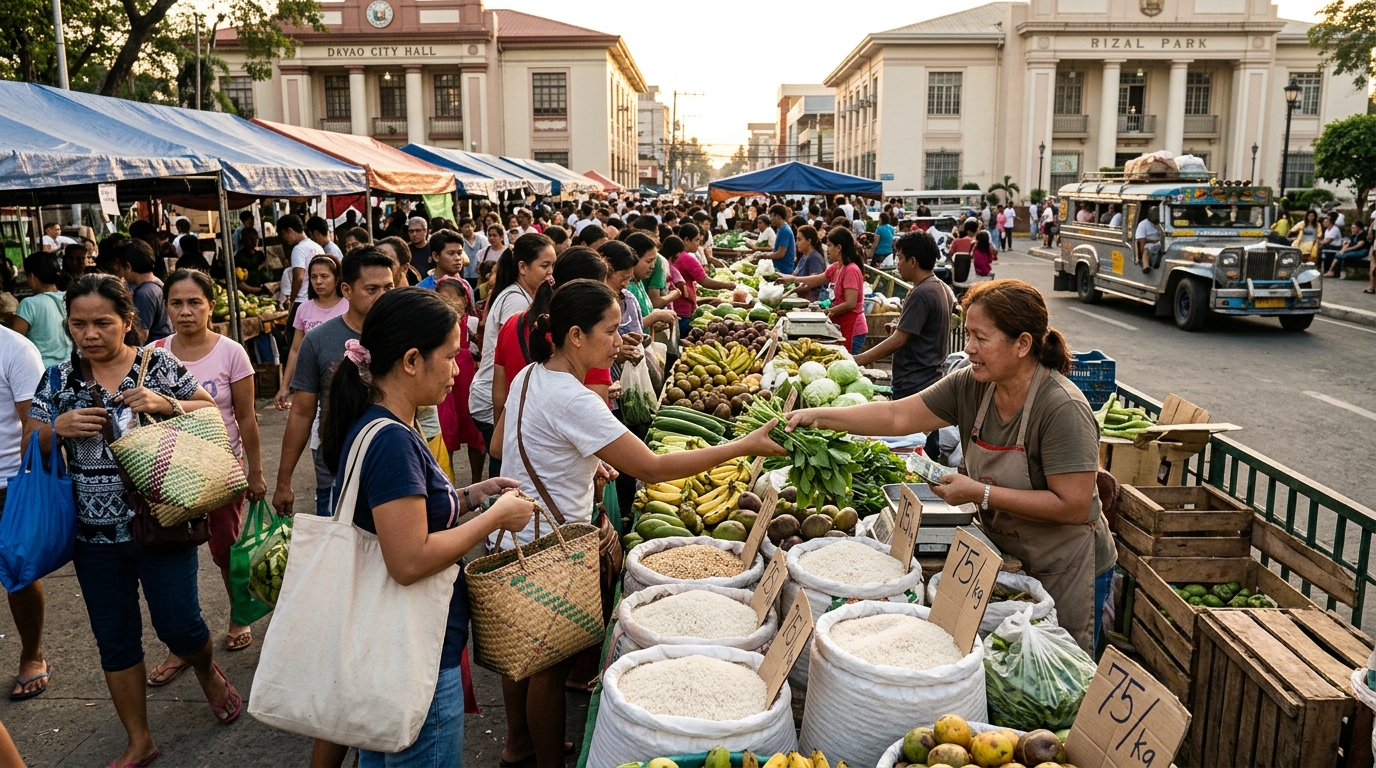
Economic data finalized by the Philippine Statistics Authority on May 15, 2026, revealed that regional inflation has jumped to a steep 8.9 percent, driven heavily by logistics and essential agricultural commodities. While Davao City itself managed to stay at a relatively stable 7 percent, matching the national average, the outlying provinces are bearing the brunt of soaring transportation costs. Rice and cereal prices surged by 28 percent year-on-year, while basic vegetables and cooking bananas saw a 20 percent increase. This economic shift is putting immediate pressure on household budgets and forcing a transformation in how residents source their daily sustenance.
The Rise of the Open-Air Farmers' Market
In direct response to these supermarket price hikes, thousands of Dabawenyos have started bypassing traditional retail chains entirely. On Thursday evening and Friday morning, crowds packed the organic farmers' markets setup at Rizal Park right beside the Davao City Hall. By purchasing directly from local growers, consumers are managing to shield themselves from the heavy logistics markups that corporate distributors pass down. This direct-to-consumer movement is providing an immediate financial cushion for urban families while keeping local agricultural income stable.
The Transportation Overhead Crisis
The underlying cause of this price surge remains the transport sector, which recorded a massive 20.7 percent annual price increase due to fuel volatility and freight expenses. Moving food from the fertile valleys of Davao de Oro—which suffered the region's highest inflation at 11.9 percent—to the city centers has become an expensive logistical challenge. Business associations are urging transport operators to explore consolidated shipping routes to cut down on empty-return trips. This structural bottleneck proves that food security in the region is completely tied to transportation efficiency.
A Structural Shift in Consumer Habits
Local economists suggest that these elevated prices are causing a permanent change in middle-class purchasing behavior, with a clear preference for seasonal, locally grown crops over imported goods. Restaurants along the primary dining strips are adjusting their menus weekly based on what is available at the Rizal Park stalls to keep their overhead manageable. Families are cutting back on non-essential spending, focusing their income on staple grains and domestic proteins. This period of forced discipline is reshaping the city's gastronomy and retail real estate priorities.