
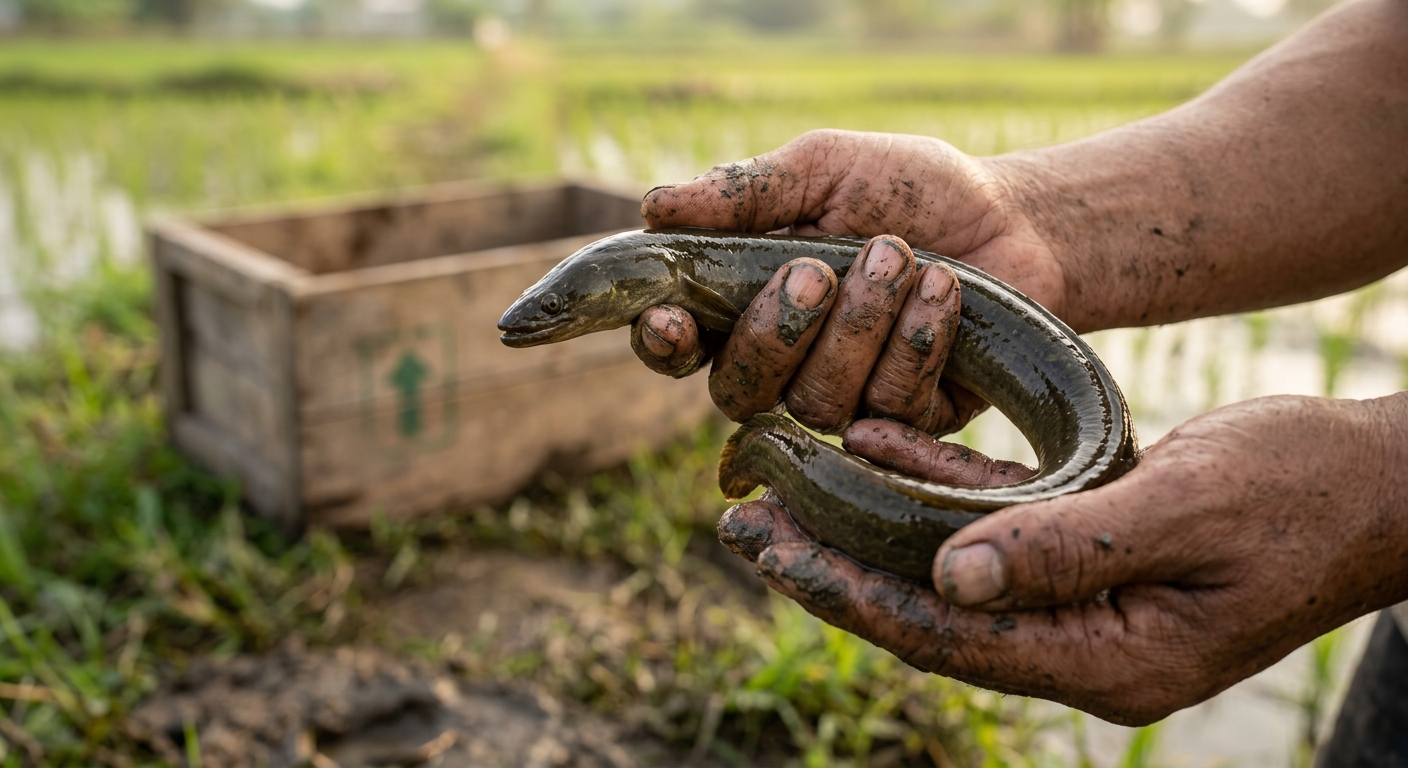
DAVAO CITY — A humble creature from Mindanao's muddy rice fields is quietly powering a new export industry. Davao City‑based Maylong Enterprises Corporation is set to dispatch its 22nd shipment of live Asian swamp eels to China on June 4, 2026. The five‑metric‑ton cargo, valued at approximately ₱1.3 million, connects rural gatherers across Mindanao to one of China's largest food markets, creating a livelihood that requires little more than local knowledge and hard work.
The shipment follows a June 1 delivery of 207 boxes weighing over five metric tons to Nanning City in Guangxi Province. MEC manager Retchie Tayco said the company initially prepared six tons for this week but had to reduce the volume due to limited cargo space. "The remaining one ton will be included in the next shipment scheduled on June 5 or 6," he said. The adjustment does not affect product quality, as the species can survive for extended periods when handled properly.
A Livelihood Without Large Capital
Unlike many agricultural ventures that demand significant upfront investment, eel gathering depends largely on labor and access to wetlands where the species naturally thrives. Gatherers locate eels by spotting small holes in muddy fields—a traditional method for identifying their burrows. MEC purchases live eels at prices ranging from ₱190 to ₱270 per kilogram.
"Dako kaayong tabang gyud ni sa mga suppliers kay wala gyud dakong capital (This is a big help to suppliers because it does not require much capital, although the work is difficult because eels are not easy to catch)," Tayco said. The enterprise has drawn suppliers from Cotabato, Maguindanao del Sur, Lanao del Sur, Agusan del Sur, Bukidnon, Valencia City, and other agricultural communities. While Davao Region currently contributes only a small share, Tayco believes more residents could benefit once they learn about the market potential.
Demand Fueled by China's Appetite for Healthy Food
Strong consumer demand in China drives the trade. Eel is widely regarded as a nutritious, protein‑rich food commonly used in soups, hotpots, and traditional dishes. "They say it is good for the body. Demand is strong in China because it is considered healthy," Tayco said of feedback from Chinese buyers.
Agriculture officials see the emerging trade as evidence of Mindanao's untapped potential. DA‑Davao Regional Executive Director Macario Gonzaga said sustained government support remains critical to expanding production and improving access to international markets. Chinese Consul General Zhao Xiuzhen has also expressed optimism about Philippine eel exports, noting that sustained marketing can strengthen trade linkages between the two countries. For the hundreds of small‑scale gatherers, every shipment represents proof that a species long found in Mindanao's wetlands can provide a pathway to additional income and global trade.