DAVAO CITY — The national government is deploying a comprehensive climate-resilience and infrastructure package to protect Davao Region’s agricultural backbone, headlined by a substantial ₱1.495-billion allocation for farm-to-market roads.
A Historic Infrastructure Investment
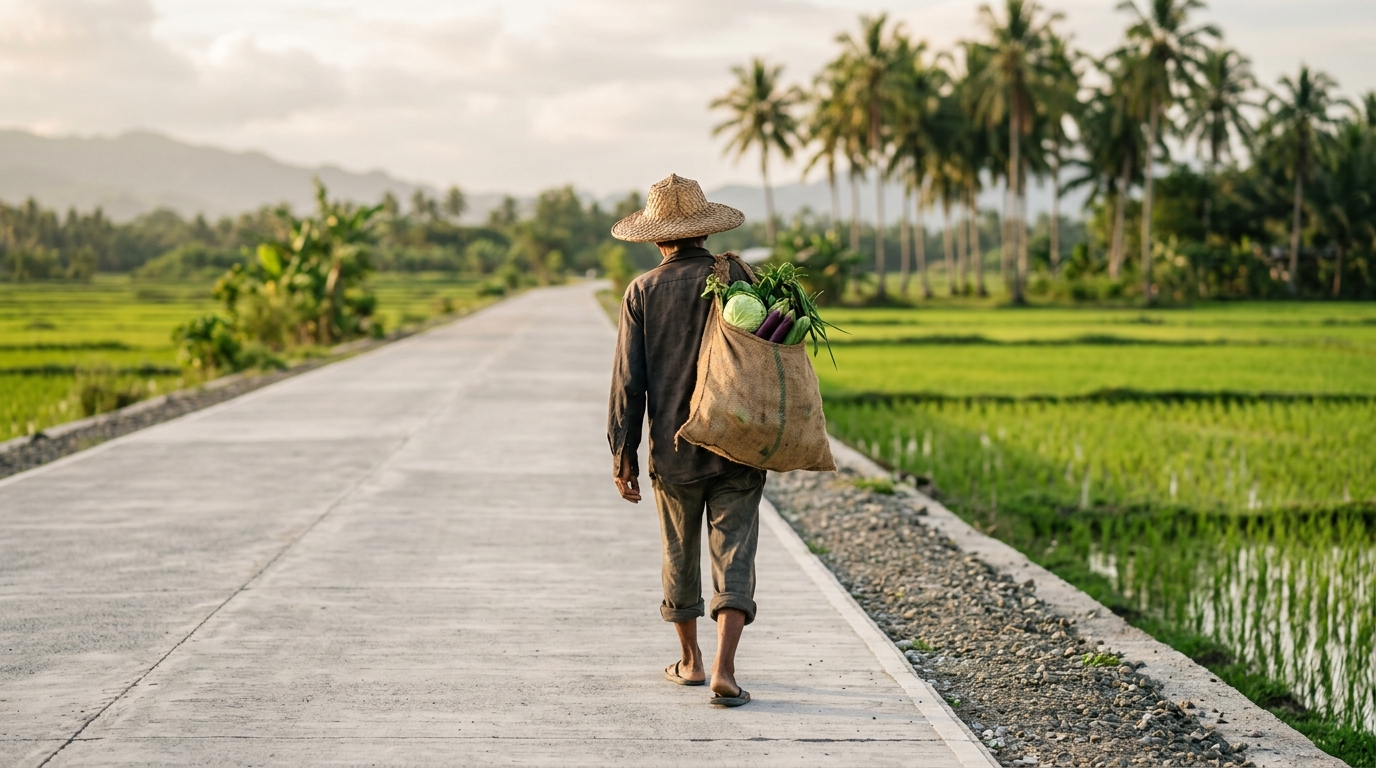
Under the proposed 2026 General Appropriations Act, the Build, Better, More program is funding climate-resilient rural infrastructure across Region XI. A total of 48 farm-to-market road projects have been earmarked for ₱1.495 billion, promising to transform rural connectivity and slash post-harvest losses.
Palace Press Officer Claire Castro confirmed that six localized projects worth ₱310 million have already completed their detailed engineering designs and program of works. These projects are now awaiting the Special Allotment Release Order from the Department of Budget and Management before construction can begin.
Why These Roads Matter Now
The infrastructure push comes as the region grapples with the harsh realities of moisture stress, which caused ₱117 million in agricultural losses from January to March 2026. Rice accounted for ₱76 million of the damage, followed by corn at ₱26 million and high-value crops at ₱14 million.
An additional ₱783 million in losses reported for April is still undergoing validation, with Davao del Norte, Davao de Oro, and Davao City expected to bear the heaviest burden. The new farm-to-market roads are designed to lower transport costs, reduce spoilage, and help farmers reach markets faster even during adverse weather conditions.
A Broader Shield for Food Security
Beyond the roads, the Department of Agriculture has activated a five-point mitigation strategy to cushion the impact of the looming El Niño phenomenon. This includes closer coordination of climate-response programs with regional offices, the National Disaster Risk Reduction and Management Council, and attached bureaus.
The DA is also intensifying information campaigns on El Niño preparedness while repositioning stocks of seeds, fertilizers, and alternative farm inputs nationwide. Farmers are being encouraged to shift to drought-tolerant crop varieties, with planting materials, soil ameliorants, pesticides, and biologics being distributed to vulnerable communities.
Technology and Collaboration at the Forefront
The government’s response is further strengthened by proactive local initiatives. Davao del Sur recently installed a solar-powered irrigation system capable of servicing 1,500 hectares, helping insulate farmers from erratic rainfall. Cloud seeding operations have also been placed on standby for rapid deployment when conditions allow.
Nearly all local government units across the Davao Region have activated their respective El Niño task forces, signaling a whole-of-society approach to crisis readiness. The DA has reinforced crop insurance, credit access, and market facilitation programs to ensure that farmers remain supported throughout the challenging months ahead.
Looking Ahead with Confidence
While forecasts suggest El Niño conditions may persist into early 2027, the combination of massive infrastructure investment, technological innovation, and interagency coordination provides a robust safety net. The ₱1.495-billion road package represents not just concrete and asphalt but a lifeline for thousands of farming families who feed the nation.