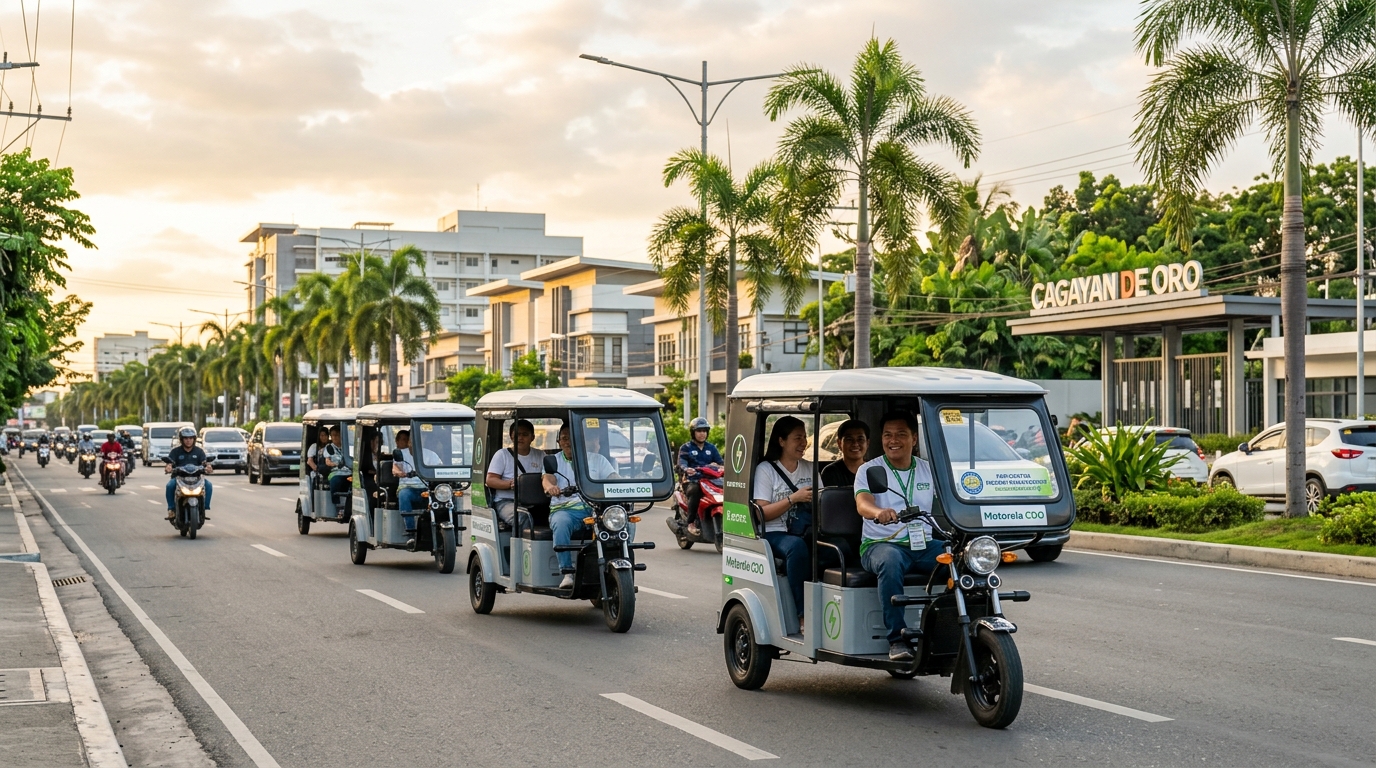
Cagayan de Oro is currently mobilizing its fiscal resources to protect its iconic transport culture from the volatile shifts of the global energy market. Following a formal recommendation in late April, the local government activated a State of Energy Emergency to release millions in subsidies for the city's most vulnerable transport workers. This week, over 1,300 registered motorela drivers began receiving a ₱7,000 financial lifeline to offset the stinging impact of rising fuel costs. For the 2026 commuter, this intervention ensures that the "Golden City's" unique three-wheeled heritage continues to navigate the streets without passing the financial burden onto the riding public.
A Shield for the Mobile Workforce
The financial assistance package is a collaborative effort between the local executive branch and the Department of Social Welfare and Development, combining ₱2,000 from city funds with ₱5,000 from national aid. Mayor Rolando Uy emphasized that the activation of the Energy Crisis Committee allows the city to bypass standard procurement delays and implement rapid-relief measures for those whose livelihoods depend on the road. This swift payout serves as a "social shield," preventing a collapse in local transport services that would otherwise paralyze the city’s day-to-day commerce. By prioritizing these small-scale operators, the city is reinforcing the stability of its grassroots economy during a period of international uncertainty.
Beyond the Gas Pump: Expanding the Relief Loop
While the immediate focus is on the transport sector, the emergency status provides a legal framework to extend aid to farmers, fisherfolk, and other sectors sensitive to energy prices. This broader strategy aims to stabilize the local food supply and protect basic commodity prices from inflationary spikes caused by logistical costs. The city council is working in tandem with energy experts to identify long-term conservation measures that can be integrated into the urban infrastructure. This ensures that the city is not just reacting to a temporary spike but is building a more resilient system for managing future energy shocks.
Preserving the Cultural Rhythm of the Streets
The motorela remains a non-negotiable part of the city’s identity, acting as the primary link between residential barangays and the central markets. Maintaining the viability of these vehicles is as much a cultural preservation act as it is an economic one. Without these subsidies, many drivers would be forced to park their units, leaving thousands of students and workers without their most affordable transit option. This proactive governance ensures that the rhythm of the city’s streets remains uninterrupted, proving that the welfare of the "little man" is the true metric of the city's success.