
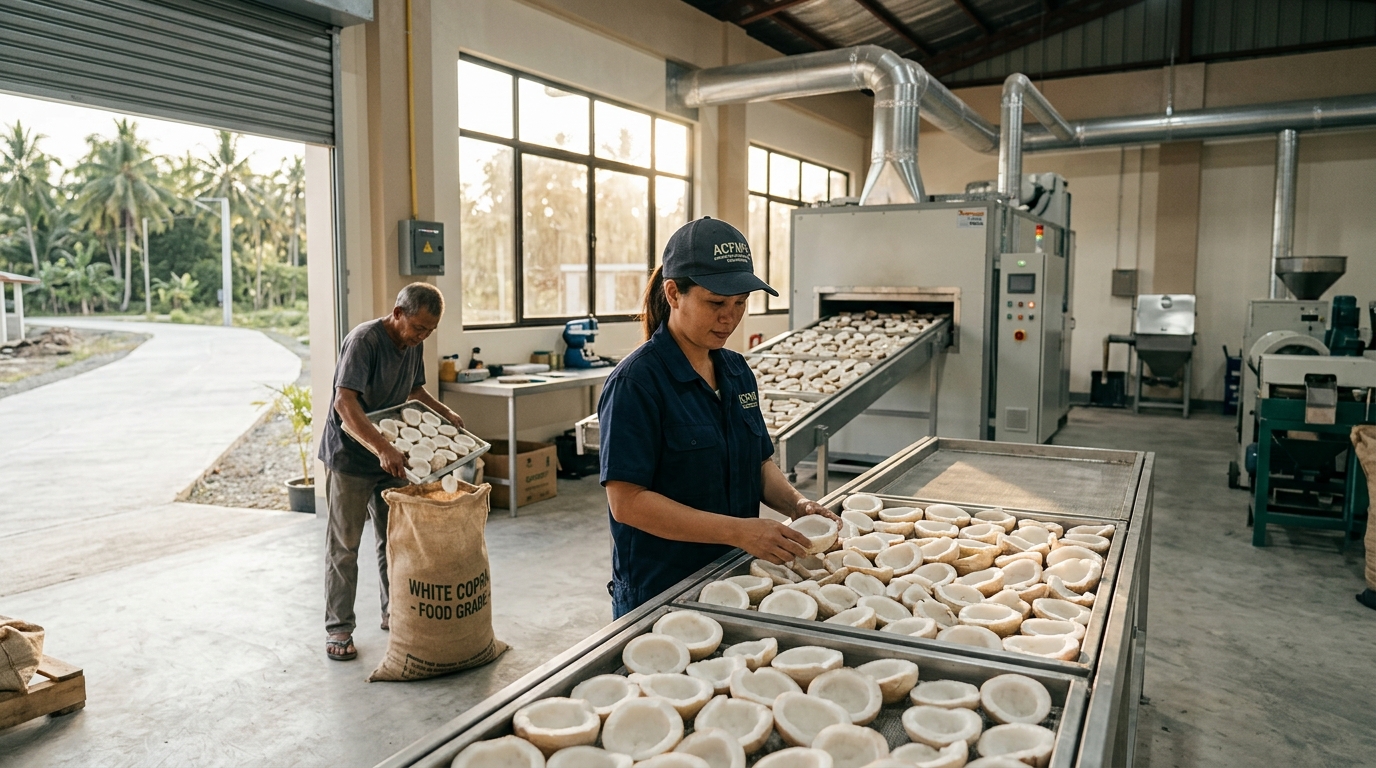
A transformative advancement for the island's foundational coconut industry officially launched in the agricultural municipality of Mabini on Friday, May 22, 2026. The Aguipo Coconut Farmers Multipurpose Cooperative took full operational control of a new White Copra Shared Processing Facility under a specialized state modernization program. Backed by joint investments from the Philippine Coconut Authority (PCA) and the Philippine Center for Postharvest Development and Mechanization, the facility introduces advanced hot-air drying machinery to the district. This new processing infrastructure allows rural growers to move away from traditional, low-value smoke drying, transitioning instead into the highly profitable production of premium white copra.
Utilizing Clean Hot Air Technology to Achieve International Quality Marks
The newly installed processing machinery utilizes indirect mechanism dryers that circulate clean hot air through the coconut halves instead of exposing them to direct wood smoke. This modern drying method prevents the formation of black molds and toxic aflatoxins, producing pristine, clear white copra that satisfies strict international food-grade standards. Because the finished product possesses a significantly higher oil concentration, national cosmetics brands and premium food manufacturers buy the inventory at substantially higher rates. This technological shift allows smallholder family farms to increase their revenues from the exact same harvest volume, instantly boosting household incomes.
Shifting Maintenance Burdens via Strategic Multilateral Infrastructure Pacts
The successful rollout of the processing facility represents a highly organized collaboration between agricultural scientists and national public works departments. While the PCA manages the internal machinery training and quality tracking, the Department of Public Works and Highways constructed heavy-duty concrete access roads directly to the cooperative warehouse. This infrastructure layout ensures that heavy delivery trucks can transport the processed copra to the Tagbilaran shipping ports smoothly during rainy weeks without getting stuck on unpaved village roads. Shifting the road maintenance costs to national budgets ensures that the cooperative can invest its profits entirely into expanding local member dividends.
Strengthening Village Enterprise Resilience Against Fluctuating Global Trends
By managing their own shared processing facility, the independent farmers of Mabini are no longer forced to sell raw, wet coconuts to opportunistic corporate middlemen at depressed prices. The cooperative structure gives smallholder growers the collective bargaining power needed to negotiate long-term supply contracts directly with major manufacturing conglomerates. This economic independence creates a powerful financial shield for rural families, protecting their domestic purchasing power from being erased by shifting global commodity market prices. The project sets a brilliant example of how countryside economies can use shared machinery to build a self-reliant, highly sustainable future.