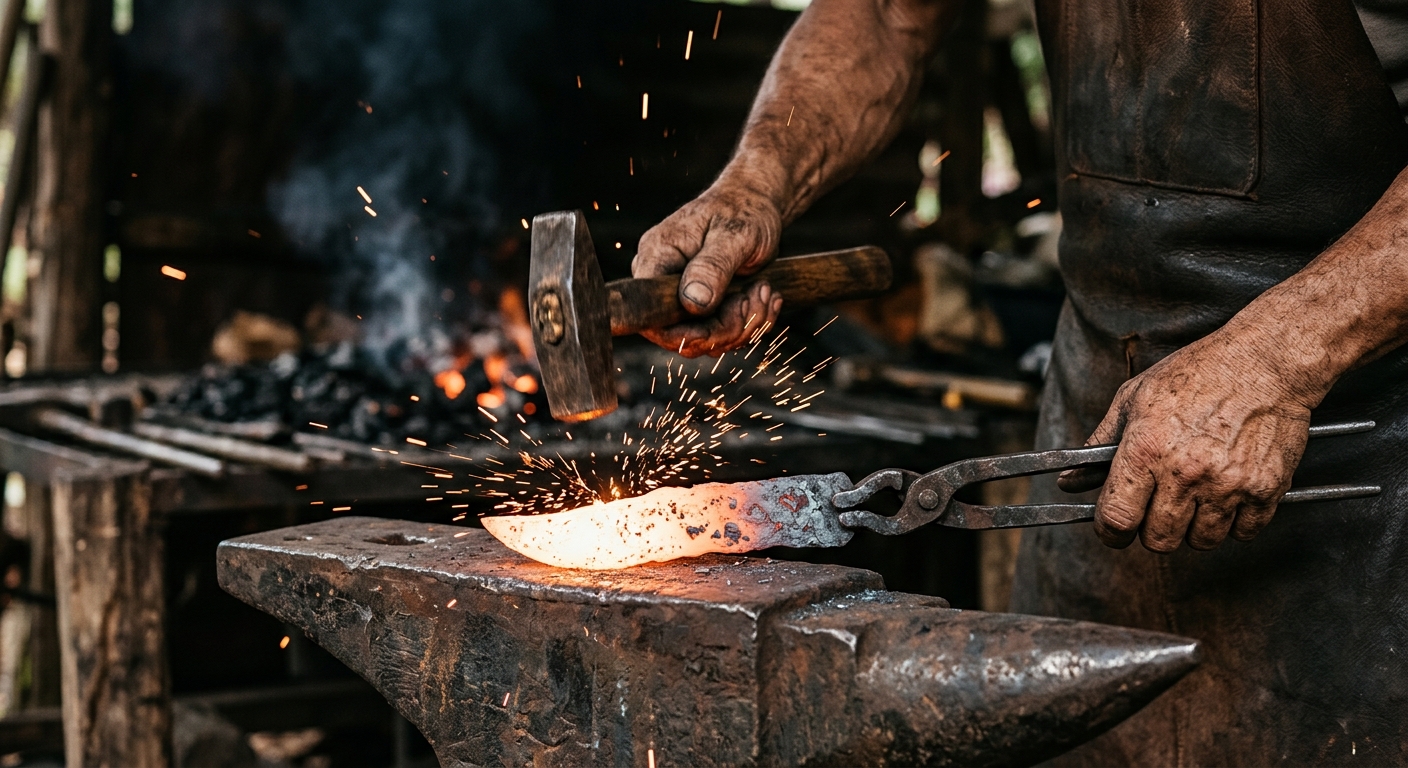
LOAY, BOHOL — Long before the first tour bus parks along the highway, the fire is already roaring. By 4 a.m., Cristino Baclayo and Pedro Guadalquiver are at their forge, the smoldering coconut charcoal casting a glow on their workshop. They pound discarded leaf springs into jungle machetes and house bolos—blades that now carry a piece of Boholano heritage into the hands of visitors from around the world. For these blacksmiths, tourism has transformed a subsistence trade into a sustainable livelihood.
The forge shops of Loay have become regular tourist stops along the Loboc-Loay corridor. Visitors watch the mesmerizing, dangerous work of shaping red-hot steel, and many leave with a handcrafted souvenir blade. The province's push for community-centered tourism has given these artisans a steady market that didn't exist a generation ago, when only a single shop operated along the highway.
A Thousand Strikes to Shape a Blade
The process is as grueling as it is ancient. It takes nearly an hour and at least a thousand strikes from a four-kilo sledgehammer to forge a single medium-sized bolo. Guadalquiver pounds while Baclayo maneuvers the glowing steel on the anvil, gripping tongs with one hand and swinging a mallet in rhythm with his partner. The steel goes back to the coals several times before it takes its final shape.
The finishing step, the local sawsaw or quenching process, requires precise timing. The blade is successively cooled at slightly different temperatures in water or oil to achieve the perfect toughness. The raw materials are recycled: car leaf springs, coil springs, and discarded chainsaw blades. From one leaf spring, two bolos can be forged.
From Warriors' Blades to Tourist Treasures
Baclayo, a third-generation blacksmith, learned the trade from his father at age fourteen. Guadalquiver learned from his aunt, one of the first in the industry in Loay. Blacksmithing in the town traces its origins to migrants from Camiguin who settled in Villalimpia and passed the craft to local workers.
The tradition carries historical weight. On March 25, 1565, the blood compact between Spanish explorer Miguel López de Legazpi and Datu Sikatuna took place at Hinawanan Bay in what is now Barangay Villalimpia. Boholano warriors of that era carried kampilans and kris daggers—weapons of the same forging tradition that the shops of Villalimpia continue today. The province's Sustainable Tourism Development Code now funnels revenue from the Loboc-Loay corridor back into barangay livelihood programs like these forges.