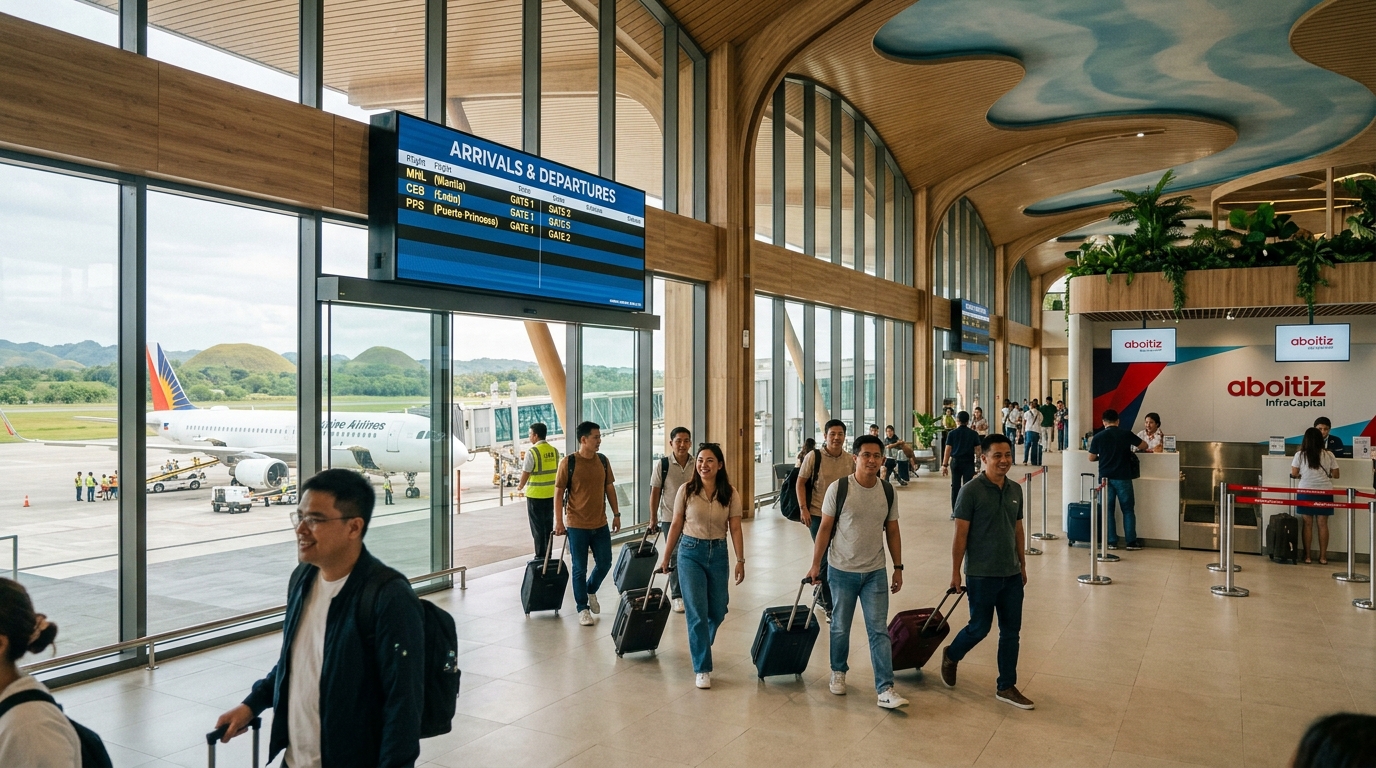
Bohol — The travel sector in Bohol is seeing a vibrant resurgence as the Bohol-Panglao International Airport (BPIA) reports strong passenger numbers for the first quarter of 2026. Data shows that the airport accommodated over 412,000 domestic passengers, underscoring its pivotal role as a gateway to the country's first and only UNESCO Global Geopark. This consistent demand highlights the growing confidence of Filipino travelers looking to explore the island’s unique blend of cultural heritage and nature-based experiences. As the primary entry point for leisure seekers, the airport remains a focal point for regional connectivity and tourism-driven economic growth.
Strengthening Regional Connectivity
The sustained interest in Bohol as a top-tier destination is being matched by efforts to enhance the overall passenger experience. Private operator Aboitiz InfraCapital is implementing phased improvements to the airport’s facilities, ensuring that the infrastructure keeps pace with the increasing number of visitors. These enhancements are designed not only to handle the current volume of travelers but also to prepare for future growth in tourist arrivals. By focusing on operational excellence and passenger comfort, the gateway ensures that travelers have a seamless start to their Bohol experience.
A Geopark-Driven Destination
Bohol’s status as a UNESCO Global Geopark continues to be a major draw for tourists seeking meaningful and sustainable travel experiences. This international recognition has elevated the island’s profile, attracting visitors who value the intersection of geological wonders, biodiversity, and local culture. The airport plays a crucial role in funneling these visitors into the island's tourism circuit, supporting local livelihoods ranging from resort staff to small-scale artisans. As the island continues to promote its geopark assets, the airport is expected to remain a vital hub for the provincial economy.
Looking Toward Future Growth
The robust traffic recorded in the first quarter sets a positive tone for the rest of the year, with tourism stakeholders remaining optimistic about the upcoming seasons. Coordination between the provincial government and private airport operators ensures that promotional efforts and infrastructure readiness remain aligned with tourism goals. By leveraging its natural assets and improving accessibility, the island is effectively positioning itself to capture an even larger share of the domestic market. The focus remains on creating a visitor-centric environment that protects the island's natural beauty while offering modern conveniences.