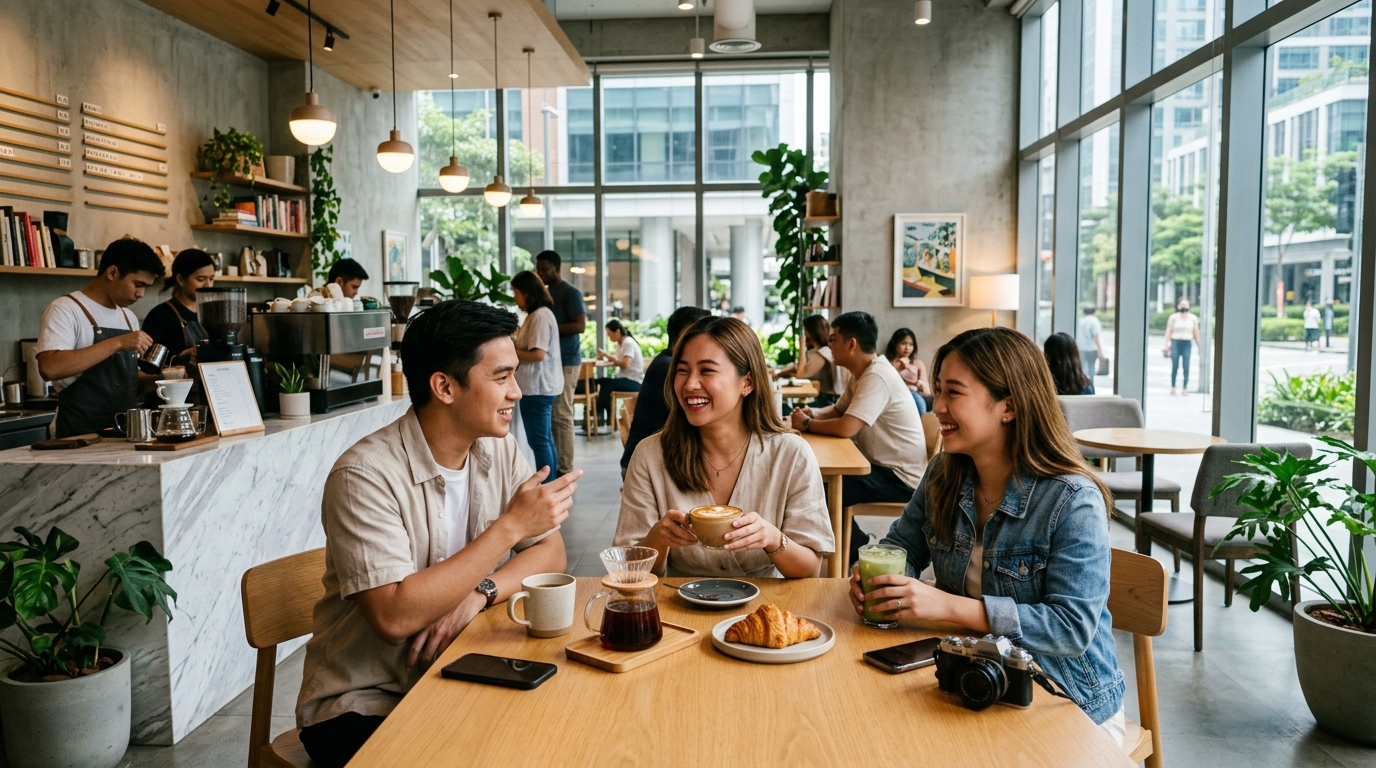
Café hopping tourism has rapidly grown into one of the most recognizable lifestyle trends in Bonifacio Global City (BGC), especially among Gen Z visitors who are drawn to aesthetic spaces, specialty drinks, and immersive social experiences. In recent years, BGC has transformed into a café culture hotspot in Taguig City, where coffee shops are no longer just places to eat and drink, but destinations that reflect identity, creativity, and modern youth lifestyle in Bonifacio Global City.
One of the key reasons behind this rise is the strong influence of social media. Platforms like TikTok and Instagram have made cafés highly visible through viral content featuring latte art, cinematic interiors, and visually appealing desserts. As a result, many Gen Z visitors go café hopping not only to enjoy coffee but also to capture photos, film short videos, and share their experiences online. This has turned cafés into “content-friendly” spaces where design and presentation matter as much as taste. Across BGC, cafés have also evolved into multifunctional lifestyle spaces. Many establishments now serve as study areas, remote work spots, and casual meeting hubs for friends and young professionals. With fast Wi-Fi, comfortable seating, and calming interiors, these cafés encourage visitors to stay for hours. Some feature minimalist Japanese or Korean-inspired designs, while others highlight modern industrial aesthetics or rooftop seating that showcases the city skyline.
Another important factor is the variety of specialty offerings available in the area. From handcrafted coffee and signature espresso drinks to artisanal desserts and seasonal menus, cafés in BGC constantly innovate to attract returning customers. This diversity encourages café hopping, as visitors move from one location to another to experience different themes, flavors, and atmospheres within a single day. Ultimately, café hopping tourism reflects how Gen Z experiences urban spaces—through aesthetics, social connection, and digital sharing. It has become more than just a trend; it is now a defining part of youth culture in Taguig City, shaping how people explore and interact with modern city life.