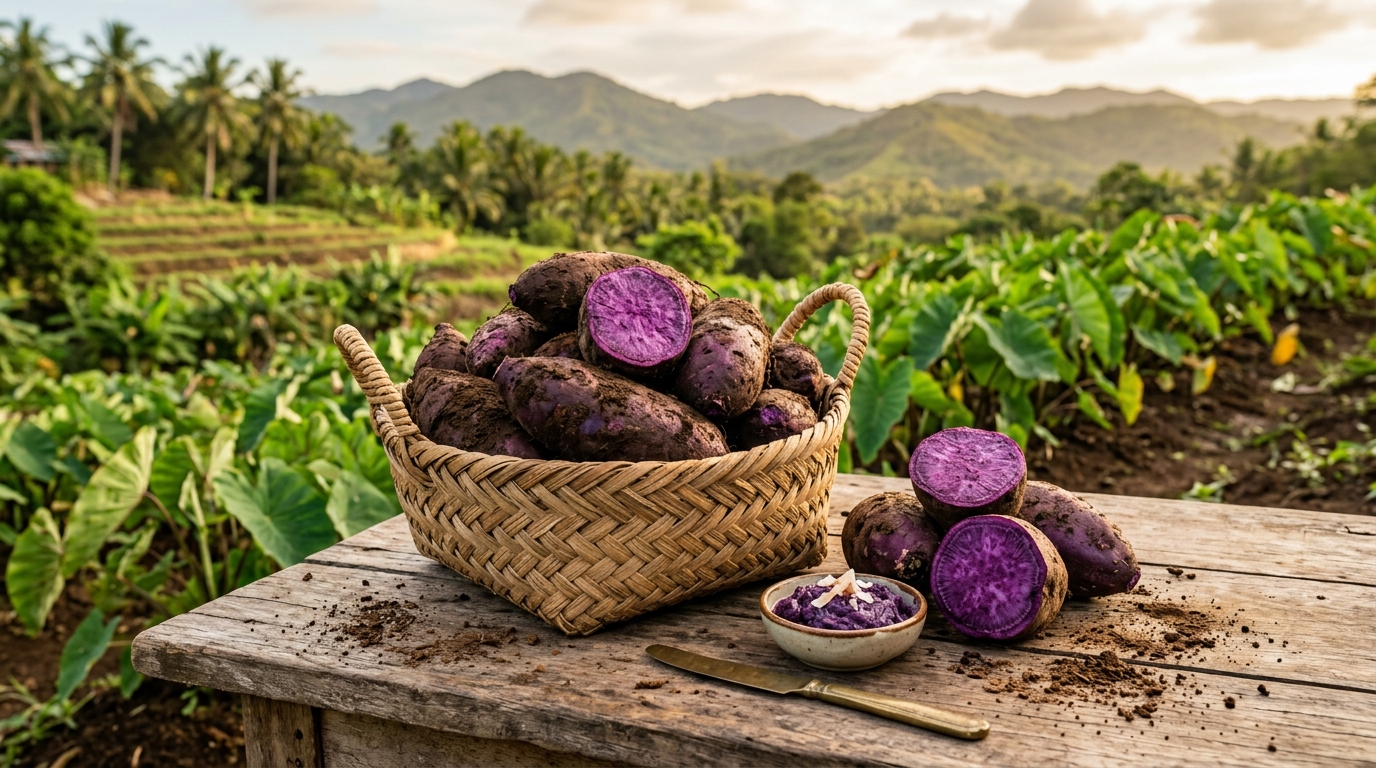
Bohol — The island province is currently at the heart of a global culinary revolution, thanks to its prized Ubi Kinampay. Long before ube became a viral sensation on Instagram or a staple in global coffee chains, it was a sacred, god-sent crop that sustained Boholanos through times of famine, drought, and war. Today, this "Queen of Philippine Yams" is bridging the gap between ancient heritage and modern demand. As the world falls in love with the vibrant violet hue and sweet, nutty flavor of ube, Bohol is stepping up its efforts to protect this legacy through a Geographical Indication (GI) bid, ensuring that the world knows the true heart of this "purple gold" belongs to the island’s fertile soil and dedicated farmers.
A Sacred Crop Meets the Global Stage
For the people of Bohol, ube is far more than an ingredient—it is an "agro-historical-geographical-religious" symbol. Local tradition even teaches children to kiss the tuber if it accidentally falls to the ground, a testament to the deep respect held for the crop that has historically ensured the island's survival. In 2026, this cultural significance has aligned perfectly with global food trends. Social media influencers and culinary icons worldwide are spotlighting ube for its "Instagrammable" color and versatile, vanilla-like profile, pushing demand to unprecedented levels. With international exports of ube derivatives—ranging from powders to purees—growing rapidly, Bohol is now positioning itself to lead the market while fiercely protecting the unique characteristics that make Ubi Kinampay superior to any other variety.
Securing the Future of 'Purple Gold'
Recognizing the economic potential of this "purple gold rush," the provincial government and the Department of Agriculture are taking bold steps to ensure the industry’s long-term sustainability. With a major project launched in June 2026 to distribute over 60,000 high-quality planting materials to hundreds of local farmers, Bohol is actively modernizing its production. Innovations like the "minisett" propagation technique and tissue culture research are helping farmers overcome traditional hurdles, enabling year-round planting and higher yields. By filing for Geographical Indication status, Bohol aims to prevent imitation and ensure that when the world tastes the authentic, complex aroma of Ubi Kinampay, they are tasting a piece of Boholano history, skill, and tradition.